AI for Personalized Learning That Stays Social
Most teams get AI personalized learning half right. They build smart recommendation engines, adaptive learning pathways, and neat dashboards, then act...

Most teams get AI personalized learning half right. They build smart recommendation engines, adaptive learning pathways, and neat dashboards, then act surprised when learners feel isolated, bored, or quietly drop off.
That’s the problem. Personalization without peer interaction turns learning into a solo grind, and I’ve seen too many edtech products make that mistake because the algorithm looked impressive in a demo. It wasn’t impressive in real use.
This article shows you how to combine AI for personalized learning with social learning in education, so your platform adapts to each learner without killing collaborative learning, student engagement, or human support.
And yes, this stuff actually works. The sections ahead pull from current research, including findings from AIR, MIT J-WEL, Dartmouth, and PubMed Central, plus the hard-earned lessons I keep seeing in real product decisions.
What AI for personalized learning really means
AI personalized learning is the use of models, data, and rules to adjust what a learner sees, does, and discusses based on their needs in real time. For CTOs, the practical distinction is simple: content recommendation suggests, adaptive sequencing reorders, and socially-aware personalization changes the learning experience while accounting for peer interaction and group context.
Here's the thing: a lot of teams say they offer AI for personalized learning when they really mean, "we recommend the next video." That's not worthless. It's just not the full job.
I’ve seen this mistake over and over. A vendor adds a recommendation engine, slaps on a glossy dashboard, and suddenly calls it transformation. It isn’t. It’s a playlist with better branding.
So let’s break it down.
Recommendation is the starting line, not the finish line
Simple recommendation means the system suggests content based on clicks, scores, or topic history. Think Netflix, but for algebra. Useful? Sure. Deeply personalized? Not even close.
For example, if a student struggles with fractions, a basic system might suggest another fractions lesson. That helps. But it doesn’t reshape learning pathways, timing, or support.
Adaptive learning with AI changes the sequence
Adaptive learning with AI goes further by changing order, pace, and difficulty based on performance and behavior. This is where real adaptive learning starts to show up.
According to a 2025 study published on PubMed Central, an AI-driven personalized learning platform reported a 12.3% improvement in grades from AI recommendations. That same study found gains flattened after 50 minutes a day, which I love because it kills the lazy idea that more screen time automatically means better outcomes.
But wait. Even that isn’t enough if your learners work in cohorts, discussion groups, labs, or project teams.
Socially-aware personalization is where personalized learning platforms get serious
Truly effective personalized learning platforms don’t treat learners like isolated tabs in a browser. They factor in social learning in education, group dynamics, and opportunities for collaborative learning.
According to the American Institutes for Research, personalization is often reduced to solo learning with technology, even though many students don’t learn best alone. I agree, strongly. Some of the best systems I’ve reviewed improved student engagement not by serving more content, but by pairing the right learner with the right peer task at the right moment.
That requires better infrastructure, not just better prompts. If you’re building this stack, your APIs, model orchestration, and data flows need to age well, which is exactly why I’d start with Evolution Ready Machine Learning Api Development.
The bottom line? Recommendation picks resources. Sequencing adjusts instruction. Socially-aware AI shapes both the individual path and the group experience. And that’s where this gets interesting next.
Why personalized learning fails when it ignores social learning
AI personalized learning breaks down when it treats learning as a solo activity. Human learning is social by default, and if your system ignores peers, discussion, and shared context, it will quietly sabotage outcomes you thought the algorithm was improving.

That sounds dramatic. I mean it.
Here’s what everyone says: personalize the path, reduce friction, let the model adapt to the individual. Fine. But if your adaptive learning engine keeps sending every learner deeper into a private tunnel, you don’t get better education. You get cleaner isolation.
I’ve seen this with teams building personalized learning platforms for workforce training and academic settings alike. Completion rates looked decent on the dashboard. Then we checked discussion quality, peer feedback, and transfer into team-based work. Ugly story. Learners knew their own next step, but they couldn’t explain ideas, challenge assumptions, or learn from stronger peers.
That’s the core tension. AI for personalized learning loves optimizing the individual journey. Real learning depends on modeling, argument, imitation, and shared meaning.
According to the American Institutes for Research, researchers gathered data from 892 students, 138 teachers, and 30 classrooms in 2025 to examine the relationship between personalization and collaboration. Their premise was dead right: personalization often gets reduced to individual tech-based instruction, even though many students do not have their needs met by learning alone.
That matters more than most product teams admit.
In practice, weak social learning creates two risks. The education risk is lower student engagement over time, because learners stop seeing themselves as part of a group that thinks together. The business risk is worse: your product may boost short-term task completion while failing the actual buying criteria, which is improved performance in classrooms, cohorts, and teams.
For example, a sales enablement platform can personalize product lessons all day long. If reps never compare talk tracks, critique calls, or copy top performers, your shiny learning pathways won’t move revenue much. That’s not a learning win. That’s expensive theater.
Look, I’m not arguing against adaptive learning with AI. I’m arguing against pretending that individualized sequencing is enough. If you’re designing serious collaborative learning technology, the model layer has to account for group tasks, peer interaction, and instructor judgment too. This is exactly where architecture choices get real, and Machine Learning Development Company Foundation Model Era gets into the kind of foundation-model thinking most teams skip.
So now the obvious question is: if solo optimization isn’t enough, what should socially-aware systems actually do?
The right balance: individual adaptation plus collaborative learning
AI personalized learning works best when it personalizes the parts that are truly individual and keeps the parts that get stronger through other people, well, social. The winning framework is simple: tailor pace, practice, and support cues for each learner, but keep discussion, projects, critique, and meaning-making group-based.
That split sounds obvious. It isn’t.
I’ve watched teams shove everything into the personalization bucket because the model can adapt it. Bad move. Just because an algorithm can individualize a task doesn’t mean it should. Sometimes the smartest product choice is to leave the room noisy.
So what belongs where?
Personalize diagnosis, pacing, and practice
Use adaptive learning with AI for things that map cleanly to a learner’s current state. I’m talking about knowledge gaps, difficulty level, review timing, hints, and next-best exercises.
Here’s what that looks like:
- Individual skill checks and formative assessment
- Dynamic review based on errors and confidence
- Adjusted learning pathways for pace and prerequisite mastery
- Targeted nudges when student engagement drops
This is where adaptive learning earns its keep. According to a 2025 study on PubMed Central, AI-driven recommendations improved grades by 12.3%. I like that result because it’s concrete, not marketing fluff.
Keep interpretation, debate, and creation social
Use social learning in education for work that improves when learners compare reasoning, explain ideas, and react to peers. Discussion boards, team challenges, peer review, case analysis, and instructor-led synthesis belong here.
According to Open Praxis, students in AI-assisted distance learning said digital collaboration tools strengthened community and reduced isolation. I’m not surprised. People stick with hard learning when they feel seen by other humans, not just scored by a system.
My rule: personalize the route, not the entire experience.
And yes, there’s a technical catch. Your orchestration layer has to decide when to hand a learner to the model, when to pull them into a group, and when to let an instructor override both. If your stack can’t handle that logic cleanly, read Deep Learning Consulting Services Without The Hype.
The bottom line? Great personalized learning platforms don’t choose between individual adaptation and collaborative learning. They assign each job to the mode that actually does it best. Next up, let’s get practical about what this looks like inside the product itself.
Design patterns for AI personalized learning with social integration
AI personalized learning should change who learns what, when, and with whom, not trap every learner in a private content loop. The best product patterns blend adaptive decisions with planned peer contact, visible cohort moments, and teacher judgment.
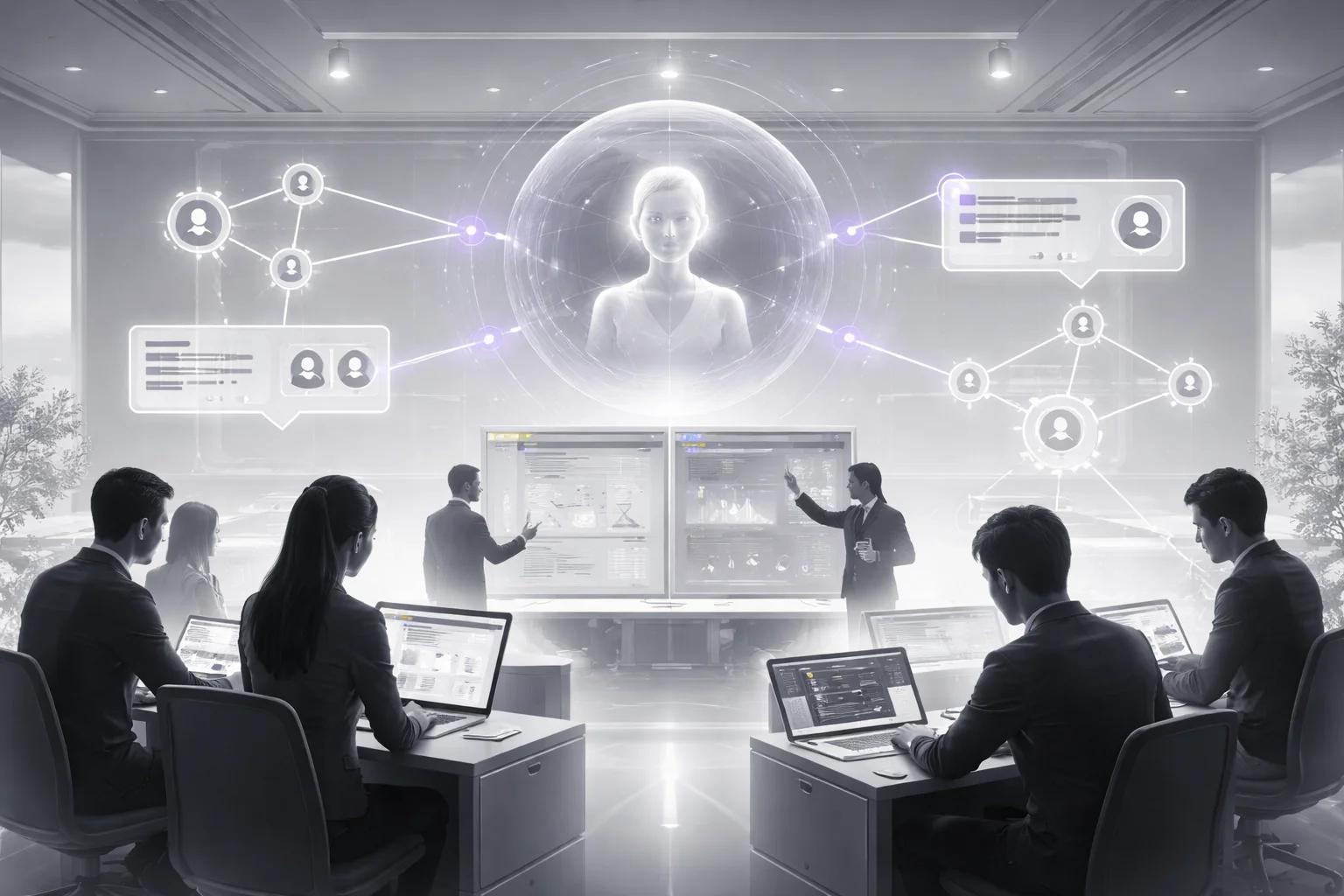
I’ll be blunt: most teams overbuild recommendation logic and underbuild social structure. That’s backwards.
Peer matching works when you match for contribution, not sameness
Here’s what I mean: don’t pair learners just because they missed the same quiz item. I’ve tested that pattern, and it often creates two confused people politely agreeing with each other.
Match one learner with strong concept mastery to another with a nearby gap, then give them a narrow task. For example, your personalized learning platforms can trigger a 7-minute peer explanation round after an individual practice block, using recent errors, confidence scores, and communication style as inputs.
That’s collaborative learning technology doing real work, not just adding a chat box.
Cohort checkpoints keep adaptive learning from getting weirdly isolating
Adaptive learning with AI needs scheduled convergence points. Otherwise your learning pathways drift so far apart that nobody can discuss the same problem at the same time.
I like fixed cohort checkpoints every one to two modules. Everyone arrives with different prep, but they tackle a shared case, debate a prompt, or compare solution paths. In product terms, that means your engine can personalize inputs while locking key outputs to a group milestone.
Look, this stuff actually matters for student engagement. Learners need to feel progress personally and socially.
Group challenge layers turn solo mastery into social learning
One pattern I love is the layered challenge. First, the system assigns individual practice. After that, it unlocks a small-group mission that requires each learner to bring one solved piece into a shared task.
For example, in social learning in education, a platform might personalize reading difficulty, then move students into teams to build one argument, critique evidence, and submit a joint response. Same destination, different prep.
Teacher-in-the-loop interventions are non-negotiable
And here’s the kicker: teachers should interrupt the machine on purpose. I know some vendors pitch full automation, but I think that’s lazy product thinking.
Use alerts for stalled discussion, repeated peer mismatch, or low-quality group participation. Then let instructors step in with a prompt, regroup a team, or override the recommendation flow. If you’re building the orchestration behind that, Deep Learning Consulting Services Without The Hype is a smart place to start.
Build these patterns well, and AI for personalized learning stops feeling mechanical. It starts feeling like a smart system that still leaves room for people.
How to build socially-aware AI for personalized learning
AI personalized learning needs more than a learner score and a content ranker. If you want AI for personalized learning that stays social, build the system around two truths at once: individual mastery changes fast, and group context changes faster.
I learned this the annoying way. A few years ago, I watched a team build a slick adaptive engine that nailed quiz remediation, then completely whiffed on group work because the model had no idea who explained well, who lurked, and who dragged every discussion into the mud.
Start with a learner model that includes social signals
Your learner model should track skill, pace, confidence, and participation in social learning. Dead simple. If it only stores correctness and completion, you’re building a tutoring bot, not socially-aware adaptive learning.
Here’s what I’d include: mastery estimates by concept, preferred modality, recent struggle patterns, peer feedback quality, response latency in group tasks, and contribution consistency. For example, one learner may score 88% on a topic but still need a peer explanation task because their written reasoning is thin and their team contribution keeps dropping.
That profile has to stay alive, not static.
Use collaboration signals as first-class inputs, not decoration
Most teams tack on discussion data at the end. Bad call.
Track who replies to whom, whose comments get adopted in final answers, who improves after peer interaction, and where group friction kills student engagement. According to the American Institutes for Research, a 2025 study spanning 892 students, 138 teachers, and 30 classrooms examined personalization alongside collaboration, which tells you something important: the social layer isn’t extra, it’s part of the learning design.
I’ve seen one weird pattern show up more than once. Quiet learners sometimes learn a ton from group threads without posting much, so don’t punish low volume automatically. Actually, scratch that, the real issue is lazy metrics. Count impact, not noise.
Recommendation logic should balance solo needs with group timing
Your recommendation engine should choose the next best action, not just the next best asset. Sometimes that action is a practice set. Sometimes it’s a peer match, a team checkpoint, or an instructor nudge.
Here’s a practical rule set:
- Send solo practice when knowledge gaps are clear and urgent
- Trigger peer interaction when explanation or comparison would help
- Hold learners for cohort milestones so learning pathways don’t drift too far apart
- Escalate to human review when group quality drops below threshold
That orchestration layer matters a hell of a lot more than people think. If your team is sorting out APIs, model services, and long-term maintainability, read Evolution Ready Machine Learning Api Development.
Close the loop with feedback, overrides, and hard evidence
Good personalized learning platforms don’t just predict. They learn from outcomes.
Feed back formative assessment results, peer ratings, completion patterns, and instructor overrides into the system. According to PubMed Central, AI-driven recommendations improved grades by 12.3% in 2025, but gains flattened after 50 minutes per day. I love that finding because it forces product teams to stop worshipping time-on-platform and start measuring what actually changed.
The build pattern is clear: model the learner, model the group, orchestrate between them, then keep a human in the loop. That’s how collaborative learning technology stops being a buzzword and starts working.
Metrics that show whether personalized learning AI is working
AI personalized learning is working when learners improve, stay connected to other people, and need better human support, not less human contact. If your dashboard only tracks completion and accuracy, you’re measuring convenience, not learning.

I’ve seen this go sideways. One team proudly showed me a beautiful dashboard with 94% module completion, rising quiz accuracy, and longer session times. Looked great. Then we checked peer discussion quality and instructor intervention logs, and the ugly truth popped out: learners were finishing faster while asking worse questions, skipping group debate, and leaning on hints so heavily that retention a week later dropped.
That’s the trap.
Completion is a weak proxy because it rewards obedience. Accuracy can lie too, especially when the system over-scaffolds answers and turns adaptive learning into a guided march where learners click the right thing without really owning the idea.
So what should you track instead?
Use two dashboards, not one
I like a split view. One dashboard for individual progress. Another for social and instructional health.
- Individual: concept mastery, delayed retention, confidence shifts, and movement through learning pathways
- Social: peer participation rate, reply quality, group task contribution, and discussion adoption rate
- Instructional: instructor overrides, time-to-support, and which interventions actually improve outcomes
For example, if scores rise but peer participation collapses, your AI for personalized learning may be personalizing learners out of the room. I know that sounds harsh. It’s still true.
Watch for the weird metric tradeoffs
Here’s one most teams miss: more time in platform can mean less learning. According to PubMed Central, gains plateaued after 50 minutes per day in a 2025 study, even though AI recommendations improved grades by 12.3% overall.
And there’s a second clue buried in that same research. Autonomous time investment correlated strongly with intrinsic motivation, r = 0.61, more than with scores directly. I love this finding because it tells you time-on-task isn’t useless, but it needs context or it’ll fool you.
Now add the social layer. According to American Institutes for Research, researchers studied 892 students, 138 teachers, and 30 classrooms in 2025 specifically because personalization without collaboration misses how many students actually learn.
My take? The best personalized learning platforms measure student engagement, retention, confidence, and collaborative learning quality together. If you’re building the plumbing behind those metrics, this is where Machine Learning Development Company Foundation Model Era becomes very relevant.
Because the real test isn’t whether the machine adapts. It’s whether people learn better together.
Common mistakes in AI for personalized learning implementations
AI personalized learning fails for predictable reasons: teams automate too much, give educators clunky workflows, build flimsy learner models, and chase student engagement metrics that look good in demos but don’t prove learning. If you’re buying AI for personalized learning, look for an AI partner that respects teachers, measures outcomes, and treats social learning in education as part of the core system, not a cute add-on.
I’ve seen all four mistakes show up in one rollout. It was a workforce learning product for a 1,200-person sales org, and the team got seduced by automation because the dashboard looked slick and the vendor promised “self-running” personalization (always a red flag, honestly).
Here’s what happened.
The platform pushed reps through individualized learning pathways based on quiz scores, but the learner profile was shallow, basically correctness, completion, and time spent. So high-confidence bluffers got advanced content too early, quieter reps got tagged as low performers because they posted less in team threads, and managers had no sane way to override recommendations without clicking through five ugly admin screens.
It got worse. The vendor celebrated rising session length and more content consumption, while call-review scores barely moved and peer coaching participation dropped. That’s not adaptive learning. That’s a content treadmill.
I know the common advice is to automate every decision you can. I disagree. Northwestern’s Center for Advancing Safety of Machine Intelligence argues AI should make precision teaching more feasible while freeing teachers for intellectual and emotional support, not replacing them. That’s the right frame. And according to PubMed Central, grades improved by 12.3% with AI recommendations in 2025, but gains plateaued after 50 minutes a day, which should kill the “more engagement is always better” myth once and for all.
So what should you ask a vendor?
- Can instructors override, regroup, and inspect recommendations fast?
- Does the learner model include peer behavior, confidence, and group contribution?
- Do success metrics include retention, performance, and collaborative learning, not just clicks?
- Can the system support real collaborative learning technology, not just solo adaptation with a discussion tab bolted on?
Buyers should be picky here. If the architecture underneath feels brittle, start with Machine Learning Development Company Foundation Model Era. Bad implementation choices don’t just waste budget. They teach people less.
FAQ: AI for Personalized Learning That Stays Social
What is AI personalized learning?
AI personalized learning is an approach where AI adjusts content, pacing, support, and recommendations to fit each learner’s needs. The good version doesn’t trap students in solo screen time. It builds better learning pathways while still leaving room for discussion, peer interaction, and teacher judgment.
How does AI personalize learning for each student?
AI looks at signals like quiz results, time on task, formative assessment data, and past activity to build a learner profile. Then it recommends the next lesson, review material, or challenge level based on knowledge gaps and progress. In practice, the best systems also factor in motivation and context, not just raw scores.
Why does social learning matter in personalized learning?
Because students don’t learn well in a vacuum. According to the American Institutes for Research, personalized learning is often treated like individual learning with technology, but many students need collaboration to fully engage and make sense of ideas. I’ve seen this firsthand: a smart recommendation engine helps, but peer discussion is usually what makes the lesson stick.
Can AI support collaborative learning as well as individual learning?
Yes, and frankly, it should. AI can recommend group activities, match students for peer interaction, flag when a learner would benefit from discussion, and help teachers form balanced teams based on skill, pace, or topic needs. That’s where AI for personalized learning gets interesting, because it stops acting like personalization and collaborative learning are opposites.
Does AI for personalized learning improve student outcomes?
The evidence says yes, if the system is designed well. A 2025 study published in PubMed Central reported a 12.3% improvement in grades from AI personalized recommendations, which is nothing to sneeze at. But here’s the kicker: better outcomes don’t come from automation alone, they come from smart instructional design and human oversight.
Is AI personalized learning effective without peer interaction?
Sometimes, but I wouldn’t bet your program on it. Solo adaptive learning can help students close knowledge gaps, yet it often misses the benefits of social learning like explanation, debate, belonging, and shared problem-solving. Open Praxis also found that AI-supported digital collaboration helped students feel less isolated and more connected, which matters a lot more than vendors admit.
How can schools design AI personalized learning to include peer collaboration?
Start by treating collaboration as part of the learning model, not an add-on after the software is bought. Schools can pair adaptive learning with group-based learning tasks, discussion prompts, peer review, and teacher-led checkpoints that pull students out of isolated pathways and back into shared work. I like systems that recommend both what a student should learn next and who they should learn with.
What features should a socially-aware personalized learning platform include?
Look for learning analytics, a recommendation engine, flexible grouping, discussion tools, peer feedback workflows, and teacher controls for human-in-the-loop decisions. Good personalized learning platforms also track individual progress without losing sight of group dynamics and student engagement. If a platform only optimizes solo completion rates, it’s missing half the classroom.
How do you balance individual learning paths with group learning activities?
You balance them by separating what should be personalized from what should be shared. Use adaptive learning with AI for pacing, remediation, and enrichment, then bring students together for projects, reflection, and collaborative learning around core concepts. I’ve found this works best when teachers set common goals but allow different routes to get there.
Which metrics matter most when evaluating AI for personalized learning?
Don’t just track completion rates and test scores. You want to measure student engagement, growth over time, knowledge-gap reduction, quality of peer interaction, teacher adoption, and whether the system actually improves learning outcomes without crushing classroom culture. One 2025 platform study also found that autonomous time investment correlated strongly with intrinsic motivation, which tells you motivation metrics deserve a seat at the table.