SAP AI Integration for Enterprise Complexity
Most SAP AI projects don't fail because the models are weak. They fail because the integration was treated like plumbing, not strategy. That's the mistake...
Most SAP AI projects don't fail because the models are weak. They fail because the integration was treated like plumbing, not strategy. That's the mistake nobody wants to admit, especially after the demo works and the budget gets approved.
SAP AI integration is where enterprise ambition meets enterprise reality: messy master data, brittle APIs, SAP S/4HANA dependencies, security reviews, and teams arguing over who owns what. According to SAPinsider, trusted data and strong platforms sit at the center of successful AI adoption in the SAP ecosystem. In this article, I'll show you where enterprise SAP AI integration actually breaks, what a sane SAP AI integration architecture looks like, and the six decisions that keep your AI initiative from turning into an expensive connector project.
What SAP AI Integration Really Means
72%.
That's the number CMSWire said hit weekly AI usage among decision-makers after jumping from 37% in a year. I read that and thought: yep, that's exactly when teams start talking themselves into dumb rollout plans.
Because once a number moves like that, everybody wants speed. Fast pilot. Fast chatbot. Fast win. And if your finance close, procurement approvals, or order fulfillment live in SAP, that's usually where the trouble starts.
People love the easy version of this story. Hook up a model. Drop an assistant into the UI. Hit an API and call it transformation. It makes for a nice slide. It even makes for a decent demo for about five minutes.
Then SAP shows up with the stuff nobody put on the slide deck: SAP S/4HANA integration, old interfaces still hanging around from past projects, custom business rules, approval chains kept alive for audit reasons, and data spread across modules, subsidiaries, cloud platforms, and systems acquired ten or fifteen years apart. I’ve seen a team get all the way to week seven before realizing one pricing rule was buried in a corner only a contractor from 2016 understood. That kind of mess isn't unusual. It's normal.
I think this is where people get it wrong: they treat enterprise SAP AI integration like it's just another SaaS connector problem. One endpoint in. One response out. Maybe a tidy little copilot so everyone can clap and move on. I'd argue that's exactly how you end up with pretty demos and ugly production rollouts.
The real issue is architecture. That's the middle of the whole thing, even if it's the least glamorous part.
SAP AI integration means connecting models, agents, and automation to SAP workflows, business data, and decision points without breaking controls, approvals, or custom logic that the business still depends on. AI can't sit off to the side like some decorative chatbot if the actual work happens inside SAP.
When this is done properly, it usually comes together in layers. SAP BTP often acts as the control plane. SAP Integration Suite or SAP Cloud Integration Suite handles process connectivity. OData services expose business objects. Then SAP AI middleware and APIs decide what gets sent to models, what gets masked, what gets logged, and what never leaves the system at all.
SAP itself kept hammering this point in its Q4 2025 updates. According to SAP News Center, integration complexity, regulatory compliance, AI sovereignty, and data quality were core barriers. Not side issues. The work itself.
That's also why recent coverage from CMSWire about zero-copy sharing between SAP Business Data Cloud and Snowflake’s AI Data Cloud mattered more than people realized. Less duplication matters. Tighter control matters. Fewer copies of sensitive data floating into places they shouldn't be matters even more when legal gets involved six months later.
If you've seen this problem show up first in customer-facing channels instead of ERP screens, our Whatsapp Voice Ai Integration Architecture piece gets at the same mistake from another angle.
So what should you do? Start with restraint. Keep core processes stable. Move context through governed interfaces. Treat SAP data integration for AI like an operating model, not a connector project and definitely not another pilot somebody wants to brag about by Friday. If someone tells you SAP AI integration is just wiring up a model endpoint, are they talking about your real system or just their demo?
Why SAP Complexity Breaks AI Integrations
Hottest take first: the connector usually isn't the thing that kills the project. People keep blaming the pipe. I think that's lazy. The wreck happens because companies ask AI to make sense of 15 years of buried exceptions, custom logic, and side-door processes nobody's touched since a 2021 migration meeting everybody forgot.
I've watched this go sideways at 11:40 p.m. in a global manufacturing rollout. The demo looked airtight: pull sales history from SAP SD, margin data from CO, vendor records from MM, mix in CRM, score the next best action for account teams. Twenty minutes later it was producing garbage. One supplier existed under three IDs. A regional product hierarchy conflicted with the global one. And a customer record was still flowing in from a supposedly retired non-SAP system that someone swore had been shut down back in 2021. That's not an integration bug. That's institutional memory coming back from the dead.
People say SAP is complicated, so buy better connectors. Sure, buy them if you need them. That's not the real fight. Failed SAP AI integration efforts usually collapse because teams treated ERP complexity like plumbing when it's really behavior fossilized in software: custom ABAP, user exits, pricing routines, country-specific approvals, business-unit workarounds, risk thresholds layered on top of each other with bad documentation and a lot of "ask Martin, he knows why that field exists." Then Martin leaves.
Your model isn't integrating with some neat box labeled “SAP.” It's colliding with every decision your company buried in SAP over the last decade or two.
That's why the mess spreads so fast once AI starts pulling across systems. A model wants SD, CO, MM, maybe CRM too, plus one outside source nobody trusts but nobody can turn off. Then reality shows up. Role-based access controls hide fields the model expected. An on-prem ECC system trails cloud apps by minutes or hours. The pretty SAP S/4HANA architecture slide stops looking pretty when stale values drift through OData services while an older SOAP layer still runs one "temporary" process that somehow outlasted three CIOs.
And no, more budget doesn't save you. CMSWire reported average AI budgets climbed from $4.5 million to $10.3 million in 2025. Big jump. Same old problem. All that money can buy is faster failure if the dependency chains across the ERP estate are still unresolved. I've seen teams spend six figures on pilots before anybody answered a basic question like which material master was actually authoritative.
SAP's own product news makes this even clearer if you read past the excitement. In January 2026, SAP News Center published Q4 2025 release notes highlighting Joule's deeper integration with Microsoft 365 Copilot and its ability to synthesize internal and external data. That's real progress. It's also exactly why weak foundations get more dangerous as AI gets better. The more connected these systems become, the more expensive dirty master data, stale interfaces, and policy gaps become.
Same deal with sovereign AI. CMSWire reported that SAP and Cohere expanded their partnership in late 2025 to offer sovereign AI solutions in Canada. Smart move for compliance and data residency? Absolutely. But sovereignty doesn't fix broken architecture. A locked server room won't rescue approval logic that's already wrong.
So what do you do differently? Get obsessive about control points. Use SAP BTP and SAP Integration Suite — or SAP Cloud Integration Suite if that's what you're running — as governance layers instead of glorified message movers. Put policy where traffic actually passes: access rules, freshness checks, data contracts, exception handling. Enforce them there. That's where real SAP AI integration discipline starts: not with bigger models or prettier demos, but with fewer surprises when systems disagree.
Funny part is this work looks boring on a roadmap slide. No fireworks. No executive applause line. Just less nonsense at midnight. And if your source systems are still arguing with each other, what exactly is the model supposed to believe?
Common SAP AI Integration Mistakes to Avoid
More than 70% of new SAP S/4HANA innovations in 2025 will include AI, according to Code4Nord. Seventy percent. I read that and had two reactions at once: that's real momentum, and that's exactly how companies talk themselves into rolling half-baked SAP AI integration projects into production.
You should care because mistakes in SAP don't stay tucked inside a tidy little pilot. A model that classifies support tickets badly is annoying. That same sloppy thinking pushed into credit holds, vendor approvals, or material planning during SAP S/4HANA integration starts hitting cash flow, delivery dates, and payment timing. I saw one team push a polished demo live after a Tuesday steering meeting and spend the next six weeks fixing broken approval logic in purchasing. That's ERP. One bad decision ricochets.
Data governance is where enterprise SAP AI integration usually breaks first. Not at the model. Earlier. SAPinsider said it plainly in its 2026 AI trends coverage: successful AI adoption in the SAP ecosystem starts with trusted, high-quality data and strong platforms, then integration comes after that. I'd argue too many teams still reverse that order because wiring things up feels faster than cleaning master data.
If your customer hierarchy says one thing in North America and another in EMEA, your model isn't producing insight. It's producing polished nonsense. If your supplier master still has duplicate vendors and stale records from three reorganizations ago, no prompt is going to rescue you. People love blaming prompts because it's easier than admitting nobody funded stewardship, approval rules, ownership models, or governance for SAP data integration for AI.
One generic agent for every process is another expensive idea that sounds smarter on slides than it works in real life. Returns in Germany aren't handled like returns in Texas. Procurement tolerances differ by plant. Finance controls shift by legal entity. I've watched teams force one model across all of it because the SAP AI integration architecture looked clean in PowerPoint. Clean diagrams lie. Real operations don't.
SAP's own direction tells you why. AI Magazine covered SAP's three-pillar AI strategy around contextual business data and collaborative workflows. Contextual means specific to the process, region, entity, and control environment. It doesn't mean flattening everything through SAP AI middleware and APIs, OData services, or a rushed build on SAP BTP so the demo feels unified for 20 minutes.
Skipping process mapping is where the nastiest failures start. Not model selection. Not latency tuning. Process blindness. Teams rush to put AI into SAP before they've mapped decision points, exception paths, owners, and control steps. Then they act surprised when the output lands in a workflow nobody actually owns.
Do the boring work first. Really. Map the process inside SAP Integration Suite or SAP Cloud Integration Suite before you touch the model. Mark every approval step, every exception route, every decision point, every production failure case, every owner. Then decide where AI belongs. Be honest about where it doesn't.
You can spot the same pattern on a smaller scale in our Ai Chatbot Integration Whatsapp Business Playbook. "Simple" integrations stop looking simple the second ignored process logic shows up.
What should you do about all this? Slow down early so you don't get punished later. Fix data quality before modeling anything. Design for local process context instead of chasing one-size-fits-all agents. Map the workflow before you build the automation. The best SAP AI integration best practices aren't flashy because flashy doesn't survive production. Discipline does.
How to Assess SAP Complexity Before You Integrate AI
Hot take: the use case with the best executive demo is often the one most likely to blow up in SAP.

People love blaming the model. Wrong prompt, weak vendor, bad copilot design, whatever's fashionable that week. I don't buy it. I've sat in meetings where a team spent 45 minutes comparing AI agents and maybe five talking about ECC remnants, BTP services, finance controls, and the custom interface some contractor pushed live in 2019 and never documented. That's not strategy. That's how you buy a polished demo and inherit a support nightmare.
The boring example usually tells the truth. An invoice-status assistant doesn't impress anyone, so it gets brushed aside. A payment-approval agent sounds important, so it gets budget. Then three months later, finance wants a change freeze, security wants new controls, Basis wants proof nothing touches production weirdly, and suddenly the "strategic" project is stuck in committee hell.
I think most enterprise teams have this backwards: they score value first when they should be scoring complexity first. The cleaner business case isn't always the safer build. In SAP, it's often the opposite.
Here's the method I'd use before approving anything: score six areas from 1 to 5. A 1 means controlled, dull, predictable. Good. A 5 means messy, fragile, political, or all three at once. Boring wins more than people want to admit.
Start with the systems map, not the pitch deck
If you can't sketch the full flow on a whiteboard in under ten minutes, you don't understand it well enough yet. List every system involved: SAP S/4HANA endpoints, old ECC pieces nobody fully retired, third-party apps, data warehouses, identity layers, and anything running through SAP BTP.
Then get specific enough that people get uncomfortable. OData services. Nightly batch jobs firing at 2:00 a.m. File drops into "temporary" shared folders that have somehow existed for four years. SAP Integration Suite flows. Custom APIs built in 2019 with no clear owner today. That's the real architecture your AI has to survive inside, not the cleaned-up diagram someone pasted into an architecture review deck.
Don't pretend every process can break gracefully
Some workflows can wobble and recover. Some create damage fast. Score process criticality against four things: financial impact, customer impact, regulatory exposure, and how ugly recovery gets if something goes sideways.
An assistant checking invoice status isn't in the same risk class as an agent influencing payment approvals. It just isn't. AI Magazine has pointed out that SAP's Business Suite connects supply chain and finance on one platform to reduce operational risk. Fine. True enough. But that only matters if you've already decided which processes are allowed to bend and which ones absolutely can't.
Bad data humiliates good models
This is where a lot of SAP AI plans quietly fall apart. Before anyone gets cute about prompts or model selection, check completeness, duplication, freshness, and master-data consistency across customer records, vendor records, materials, and pricing tables.
This is usually where SAP data integration for AI gets exposed for what it really is. Everyone says they want less manual work. Great — put numbers on it. Embee Software has cited strong integration programs aiming for a 90% cut in manual data entry over roughly 90 days in legacy-heavy environments. You're not getting anywhere near that if two analysts are still fixing mismatched vendor records by hand every morning at 8:15 just so postings don't fail before lunch.
Count touchpoints like each one sends you an invoice
The wider the surface area, the more failure points you own. Count inbound connections, outbound connections, dependency chains, API limits, middleware hops, and whether your SAP AI middleware and APIs sit behind governed controls or some leftover script nobody wants to admit is still running.
If one use case needs five systems and three orchestration layers inside SAP Cloud Integration Suite just to answer one question, I'd argue that isn't elegant architecture. It's brittle with better marketing.
Security stopped being a final checkpoint
Sovereignty is now part of design whether teams like it or not. SAP News Center said enterprises by 2026 will increasingly demand AI and cloud tools that are both advanced and regionally compliant. That's not legal footnote material anymore. That's architecture input on day one.
Check data residency requirements, role-based access controls, audit logging, input masking for model calls, and whether sensitive fields ever leave approved regions anywhere in the flow. I've seen teams save six weeks during build and lose six months waiting on approvals because no one asked where masked fields were actually processed after they left the source system.
The ugliest complexity is usually human
Stakeholder count matters less than veto power. Yes, list everybody involved: Basis teams, security leads, finance operations, procurement owners, integration teams, data stewards, legal counsel. Count them if you want.
But that's not enough. A project with three stakeholders who can stop deployment cold is often harder than one with eight informed participants who just need visibility. People miss this because dependency mapping sounds like admin work when it's really risk work wearing boring clothes.
If you want to see the same pattern on a smaller stage before staring down a giant SAP stack, our Whatsapp Business Ai Chatbot Integration Guide shows how dependency mapping changes design choices even in a much simpler setup.
So what actually kills an SAP AI project? Usually not ambition by itself. Unscored complexity does it first.
And "too complex" isn't always bad news. Sometimes it's money saved early. If your six-area score comes back ugly enough to stop the build before contracts get signed and roadmaps get announced, that's not failure. That's discipline doing its job.
The weird part? The projects that survive aren't always the flashiest ones. They're often the plain little use cases nobody bragged about in QBR slides because they were clean enough to ship. So before anyone asks which AI idea looks best for next quarter — who's scoring the mess underneath it?
Enterprise-Scale SAP AI Integration Patterns That Work
I watched a team force “API-first everywhere” into an SAP program in 2025, and by month six they were buried in cleanup. Orders looked fine in one dashboard, approval queues stalled in Germany, stock updates showed up late for Singapore, and somebody was still staring at failed jobs at 2:13 a.m. because the architecture matched a slogan instead of how the business actually breaks. I'd argue that's the real job here. You're not picking a style. You're picking your failure mode.
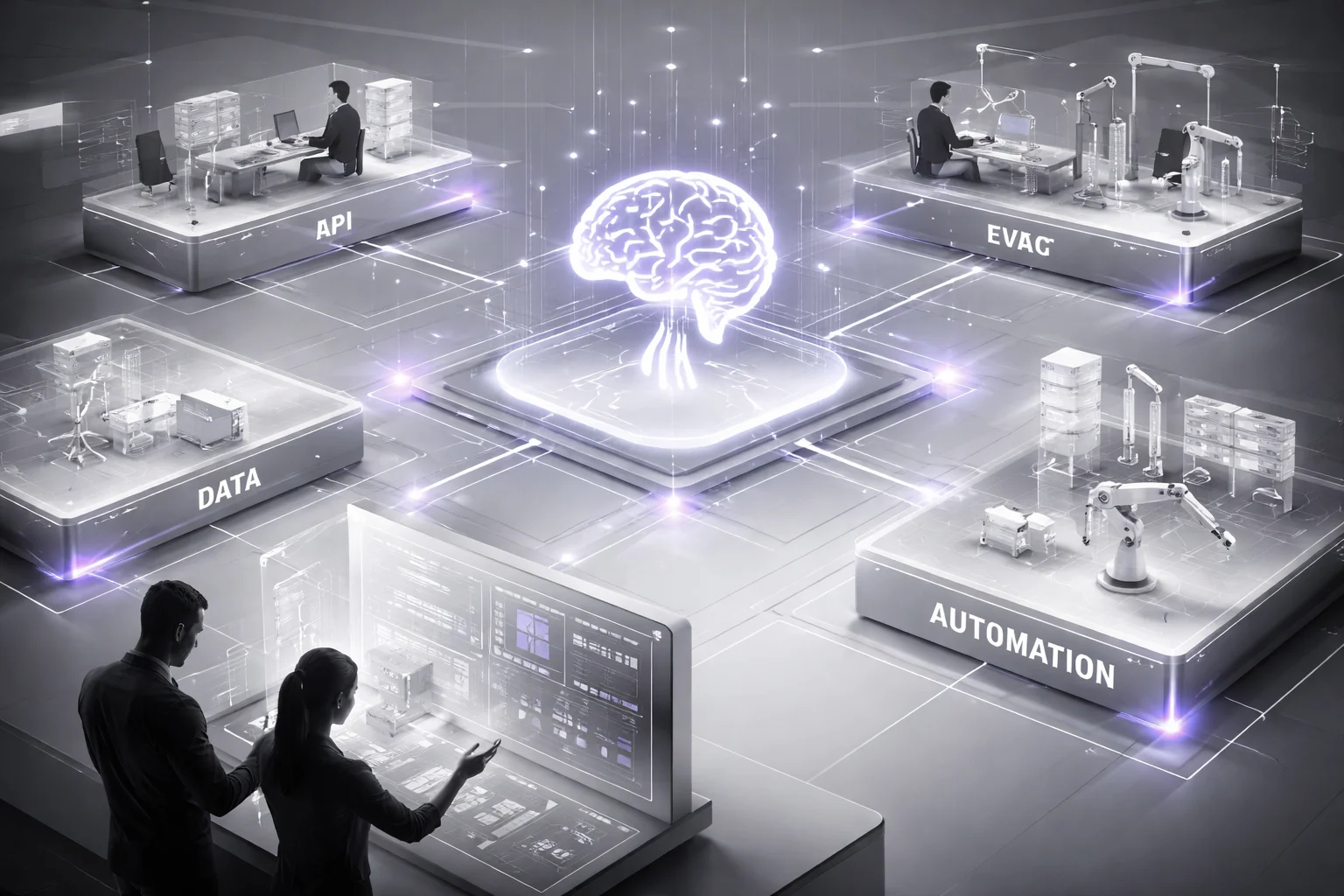
That's the framework I use now: start with the kind of mess you're most likely to have, then choose the pattern that contains it.
When the process should be dull, use API-first orchestration
Some flows shouldn't be creative. Invoice status checks. Order validation. Vendor enrichment through OData services coming out of SAP S/4HANA integration layers. Clear object. Known path. Clean inputs, clean outputs, no surprises if you've designed it right.
SAP BTP is a solid place to run this, especially with SAP Integration Suite or SAP Cloud Integration Suite coordinating calls across systems. You get traceability, policy control, and fewer weird hidden dependencies that only show up after go-live. That's not theory. If an auditor asks why an order was blocked on March 18, 2025, someone needs the exact call chain, not a shrug and three screenshots from different tools.
People oversell this pattern. It cracks fast when the workflow keeps changing. Regional approvals are usually where it starts. One country adds a local finance reviewer on Tuesday. Another market drops procurement sign-off on Friday. Your neat sequence turns into a weekly repair job.
When waiting causes damage, go event-driven
Polling every few minutes is just slow failure with nicer wording. Goods movement updates don't care about your batch window. Delivery exceptions don't arrive on schedule. Fraud signals and stock anomalies definitely don't stand in line.
An event-driven SAP AI integration architecture reacts when state changes happen instead of asking over and over whether something changed already. That's why it fits volatile operations better than rigid orchestration flows. SAP said in its January 2026 AI themes coverage that enterprise applications are being built more natively around AI agents and natural-language workflows. Agents need current context. Not yesterday's snapshot from a scheduled sync that ran at 11:45 p.m.
I think teams underestimate how expensive lag is until they measure it. I saw one distribution operation shave nearly 18 minutes off exception handling just by stopping the constant polling loop and pushing events into the right downstream actions.
When your estate is ugly, decouple it before you do anything clever
This is the one people resist because it isn't sexy. Old SOAP services. Custom ABAP logic. Cloud apps speaking their own dialects. That's where SAP AI middleware and APIs stop looking like boring plumbing and start looking like survival gear.
You isolate models from ERP weirdness. You normalize payloads before they hit inference or downstream apps. You add retries and monitoring without pretending every source system is suddenly going to behave like a modern service just because leadership approved an AI budget.
I've seen teams burn three sprints trying to make upstream systems “clean enough.” Bad call. A middleware layer would've removed about 80% of the pain in week one. It isn't glamorous work. It lasts. That matters when post-go-live targets include keeping data sync failures under 1%, which Embee Software pointed to in 2025 as a marker of strong integration programs.
When mistakes get expensive fast, keep a human in the loop
If money moves, compliance gets touched, or supplier risk is involved, don't let automation run wild. Not forever on every action. Just where confidence scores drop or business impact jumps.
This stays one of the smarter SAP AI integration best practices for a reason: humans catch edge cases models miss. A duplicate vendor that looks valid at first glance. A payment exception tied to a country-specific rule added last quarter. A supplier flag that technically passes validation but feels off to the person who knows the account history cold.
Scale doesn't erase this need. It makes it sharper. oXya noted that SAP reported in 2024 that 27,000 customers were already using SAP Business AI. At that size, governance isn't extra process layered on top of “real work.” It's table stakes.
When answers live everywhere, use RAG — but keep it grounded
Some questions aren't sitting in one table waiting politely to be queried. Procurement reviews pull from policy files, transaction history, and live ERP context all at once. Service troubleshooting works the same way. Finance exception handling too, because nobody wants to write ten manual queries just to understand one weird posting.
That's where retrieval-augmented generation helps — if it's built on governed SAP data integration for AI. Don't dump random exports into a vector store and pretend you've got architecture now. That's how teams get confident nonsense wrapped in decent formatting, which is somehow worse than an obvious error because people believe it for twenty minutes before anybody checks.
A useful parallel sits outside classic ERP-heavy workflows too. If you want another example of how system design changes response quality in a channel-rich setup, see our Whatsapp Voice Ai Integration Architecture.
The pattern that works usually isn't the trendy one. It's the one that matches the exact way your business fails when nobody's on stage and no one's hiding behind conference-slide advice anymore.
Designing SAP AI Integration for Reliability and Scale
At 6:47 p.m. on a month-end close, nobody cares how pretty your architecture diagram looked in the steering committee deck. They care that a downstream approval service is timing out, retries are stacking up inside SAP Integration Suite, and somebody in procurement is one tired click away from accepting an AI suggestion without enough context as it moves toward SAP S/4HANA. I've watched teams shrug off 800 milliseconds like it's rounding error. It isn't. In one AI-assisted procurement flow, that kind of delay lined up with a 12% increase in exception handling. That's not minor latency. That's operations pain.
People get ahead of themselves fast. SAP BTP in the middle. Governed OData services on the edge. Some SAP AI middleware and APIs connecting the pieces. Demo works once, everyone smiles, and suddenly the room starts talking like the thing's production-ready. I think that's where a lot of these projects go sideways.
The hard part isn't the intelligence. It's what happens when the intelligence hesitates, guesses wrong, or shows up at the worst possible moment. I'd argue controlled failure is the center of the whole design problem, and even that falls apart if your governance is sloppy.
That's why at Buzzi.ai we design enterprise SAP AI integration for ugly conditions, not ideal ones. Invoice processing is a good example because it exposes every weak assumption. The assistant reads invoice state through governed OData services, passes enrichment through orchestration layers, and when confidence drops, it stops pretending to know the answer and hands the case back to a person. That's much closer to reality than "full automation" slides ever are. It's also how teams chase results like the 40% improvement in invoice processing time reported by Embee Software. Not by letting the model bluff.
Here's the part teams resist because it sounds less exciting than AI features: observability. You need request tracing across middleware hops. You need model latency logs. You need business event correlation IDs that survive handoffs between services. You need alerts tied to process impact, not just CPU graphs and green dashboards nobody looks at after lunch. If purchase orders are still technically being created while exceptions creep upward, things aren't fine. They're drifting.
SAP's own roadmap makes this impossible to ignore now. CMSWire reported that SAP released six AI-powered features in Q4 2025 across spend management, procurement, and customer workflows. Same report pointed to the conversational AI market reaching $50 billion by 2026. More AI inside core systems means more places where weak controls get expensive fast.
Boring wins here. Really. The rollout should feel almost disappointingly boring if you're doing it right.
- Pick one process with a low blast radius first.
- Add fallback-to-human rules before go-live, not after your first bad week.
- Log every decision and every exception so you can explain what happened on Tuesday morning instead of guessing on Friday.
- Keep the system in advisory mode first, then move to action mode only after error patterns settle.
- Recheck access controls, retention rules, and policy boundaries every release cycle.
If you've read our Whatsapp Voice Ai Integration Architecture piece, you've seen this same discipline show up in a totally different environment. Different channel, same truth: reliability isn't glamorous, but it's what survives traffic spikes and stalled approvals.
The best SAP AI integration best practices won't make your stack look flashy. They'll make it much harder to knock over when real business pressure shows up. So when traffic spikes at 5:58 p.m., what exactly are you expecting this system to do?
FAQ: SAP AI Integration for Enterprise Complexity
What is SAP AI integration?
SAP AI integration is the work of connecting SAP systems, business data, and AI models so AI can act on real operational context instead of guesses. In practice, that means linking SAP S/4HANA integration points, SAP BTP services, APIs, and data pipelines so predictions, copilots, and automations can run inside actual business processes.
How do you integrate AI with SAP systems like S/4HANA?
You usually start with the business process, not the model. Then you connect SAP S/4HANA through OData services, REST and SOAP APIs, or SAP Integration Suite, move the right data into an AI-ready layer, and return outputs into workflows your teams already use. If the AI result can't trigger or support a real SAP transaction, it's probably a demo, not an enterprise SAP AI integration.
Why do SAP complexity issues break AI integrations?
Because AI doesn't fix messy architecture. It exposes it. Custom code, inconsistent master data, brittle interfaces, and undocumented dependencies create bad inputs, slow response times, and unreliable outputs, which is why SAPinsider keeps pointing to trusted data and strong platforms as the foundation for AI adoption.
Can SAP BTP be used for AI integration?
Yes, and for many companies it should be part of the plan. SAP BTP gives you services for extension, integration, data access, security, and orchestration, which makes it a practical base for SAP AI middleware and APIs without stuffing more logic into the ERP core. That's especially useful when you need enterprise controls around compliance, sovereignty, and lifecycle management.
Does SAP integration require middleware for AI use cases?
Not always, but direct point-to-point connections age badly. Fast. Middleware becomes important when you need routing, transformation, retry logic, monitoring, and policy control across many systems, especially in enterprise SAP AI integration where one model may depend on SAP, CRM, data platforms, and external services at the same time.
Which SAP integration services are best for AI workflows?
There's no single winner. SAP Integration Suite is a strong fit for process integration and managed connectivity, SAP BTP works well for extensions and AI-adjacent services, and native APIs are fine for narrow use cases that don't need heavy orchestration. Actually, that's not quite right. The best choice depends on whether your AI workflow needs real-time decisions, event handling, batch scoring, or cross-system governance.
What data integration approach should you use for AI features, real-time or batch?
Use real-time streaming when the decision expires quickly, like fraud checks, supply chain alerts, or service recommendations inside a live transaction. Use batch for forecasting, planning, segmentation, or nightly enrichment where latency matters less than cost and stability. Most mature SAP data integration for AI setups use both, because forcing everything into real time is one of those ideas that sounds smart until your queues back up.
How do you design an SAP AI integration architecture for reliability at enterprise scale?
Start with loose coupling, clear interface contracts, and failure isolation. A solid SAP AI integration architecture uses APIs for request-response work, event-driven architecture for asynchronous flows, message queues and orchestration for resilience, and strong error handling and retry logic so one bad payload doesn't take down an entire process chain. Then add monitoring and observability from day one, because you can't fix what you can't see.
How do you prevent data quality and governance issues from hurting AI outputs in SAP?
You treat data quality and data governance as part of the product, not cleanup work for later. That means validating source data, enforcing master data management (MDM), tracking lineage, defining ownership, and setting rules for who can use what data for which model. According to SAP News Center, SAP has explicitly called out data quality, compliance, and sovereignty as core barriers to AI value, which tells you this isn't a side issue.
What monitoring, security, and MLOps practices matter most for SAP AI integration?
You need three layers of discipline: technical monitoring, access control, and model operations. Monitor interfaces, latency, payload failures, retries, and downstream business impact; lock down authentication and authorization with least-privilege access; and manage model versions, drift, approvals, rollback, and retraining through model lifecycle management (MLOps). If your AI can write back into SAP but you can't explain who approved the model and what changed, you're not ready for production.