AI Development Company Germany: Fit Guide
Germany isn’t “exploring” AI anymore. It’s using it, fast. If you’re looking for an AI development company Germany leaders actually trust, you’ve probably...

Germany isn’t “exploring” AI anymore. It’s using it, fast. If you’re looking for an AI development company Germany leaders actually trust, you’ve probably noticed the problem already: half the market sounds brilliant on sales calls, then falls apart when your team asks about data privacy, MLOps, on-premise deployment, or real integration work.
That’s exactly what this guide fixes. You’ll learn how to judge a German AI development company by the stuff that actually matters, from GDPR-compliant AI and enterprise data security to proof of concept discipline and industrial AI use cases.
And this isn’t theory. I’ve seen flashy AI pitches crash the second they hit messy enterprise systems. According to the ifo Institute, 73.7% of IT service providers in Germany already use AI in 2025. So yes, the market is moving. Your selection process needs to move faster, and smarter.
What an AI development company Germany Really Offers
An AI development company Germany is not just “high quality.” It’s usually a specific mix of industrial know-how, disciplined engineering, and stricter data handling expectations.
I’ll be blunt. Buyers get this wrong all the time.
They hear “German AI development company” and assume the label alone means better code, smarter models, or safer delivery. That’s lazy thinking. What you’re really buying is a capability profile, and in Germany that profile often shows up in factory-floor systems, regulated enterprise environments, and AI projects where failure has an actual cost, not just a dip in click-through rate.
Here’s what that looks like in practice: AI software development Germany often leans hard into operational use cases like predictive maintenance, quality inspection with computer vision, document workflows powered by natural language processing, and deeply integrated machine learning development for ERP, MES, or legacy manufacturing systems. That’s different from a vendor whose whole portfolio is chatbots for SaaS startups.
A few years ago, I saw a mid-sized automotive supplier compare two vendors for a defect-detection rollout. One had a flashy demo. The other had spent years working on image pipelines for production lines with ugly lighting, changing part tolerances, and operators who didn’t care about AI buzzwords. Guess who won. The second team did, because they understood the messiness of industrial AI development Germany, not just the model architecture.
And that difference matters.
According to the ifo Institute, 70.4% of companies in Germany’s automotive industry use AI in 2025. That number tells you something real. German vendors aren’t operating in a vacuum. They’re building for sectors that demand traceability, uptime, and systems that survive contact with reality.
But don’t romanticize it. Not every enterprise AI company Germany is magically right for you. Some are brilliant at plant analytics and useless at customer-facing products. Some are excellent AI consulting company Germany options for scoping and governance, but weak on shipping custom AI solutions into production. I’ve seen both.
If you want the smart way to judge that gap, read best AI development company fit vs prestige.
So start here: don’t ask whether a German vendor is “good.” Ask what kind of environment they’re built for, what systems they’ve integrated with, and whether their strengths match your mess. That’s the real filter. And next, you need to know which signals actually separate serious teams from polished sales decks.
Why Germany Matters for Industrial AI and Privacy-Critical Projects
Germany matters because it’s unusually strong where AI projects get messy: factories, regulated workflows, legacy systems, and data-sensitive environments. If you’re hiring an AI development company Germany, you’re often buying operational discipline as much as model skill.

Look at the numbers. According to the ifo Institute, 70.4% of Germany’s automotive companies use AI, and more than 40% of manufacturing firms do too. I don’t read that as hype. I read it as proof that German teams build in places where downtime costs money fast.
That changes the kind of vendor you get.
A startup-focused shop might show you a cute demo and call it innovation. An experienced German AI development company working in industrial settings usually talks about MES connectors, SAP data models, sensor latency, review queues, and fallback logic when the model confidence drops below 92% on a live line. That’s not sexy. It’s useful.
I’ve seen one deployment that made this painfully clear. A supplier wanted computer vision for surface-defect checks on stamped metal parts, around 18 images per second, tied into an existing MES and a human review station because false positives were jamming operator flow. The first vendor nailed the demo and then fell apart on integration. Actually, scratch that, the real failure was simpler: they had no clue how production people work. The second team rebuilt the pipeline, added review thresholds, logged every rejected image for audit, and got the system stable enough for shift supervisors to trust it.
That’s industrial AI development Germany at its best.
And privacy matters just as much. Germany’s enterprise buyers tend to care about access controls, retention rules, on-premise deployment, and GDPR-aligned approvals before anyone touches production data. Good. I love that instinct, because sloppy data handling kills AI projects long before the model does.
The OECD also points out that German firms are pushing harder into AI, partly because of labor shortages and generative AI momentum, while data access and quality still slow progress in some cases. That tracks with what I’ve seen. Strong teams compensate with tighter machine learning development processes, clearer data contracts, and boring but critical governance.
If your project touches regulated documents, plant data, or sensitive workflows, an enterprise AI company Germany or AI consulting company Germany can be a very smart bet, especially for custom AI solutions, natural language processing, and predictive maintenance work that has to fit existing operations instead of bulldozing them.
Want to see how that governance piece should look? Read Enterprise Ai Development Company Governance.
Next up, I’ll show you how to tell the serious operators from the polished pretenders.
Common Mistakes When Hiring an AI development company Germany
The biggest hiring mistake is simple: buyers pick a German vendor for reputation, not project fit. That sounds safe, but I’ve watched it create bloated scopes, slower delivery, and solutions that are way too heavy for what the business actually needed.
Here’s the trap.
A team wants a quick prototype for a consumer app, maybe a lightweight natural language processing feature or a basic recommendation engine. They hire an AI development company Germany because “German engineering” feels reliable, and to be fair, that instinct isn’t crazy. But then the vendor shows up with enterprise architecture diagrams, long discovery phases, security reviews, MLOps plans, and enough documentation to make a compliance officer smile.
For a factory system, that can be perfect. For a three-week proof of concept, it’s a mess.
I’ve seen founders spend €120,000 building what should’ve been a €25,000 validation project. Not because the vendor was bad. Because the buyer chose an enterprise AI company Germany built for regulated operations, then expected startup speed and startup pricing. Those are different animals.
And yes, this happens outside manufacturing too.
An industrial AI development Germany specialist might be excellent at predictive maintenance, sensor pipelines, or computer vision on production lines with ugly real-world constraints. That same team may overbuild a low-risk customer support bot or a narrow internal search tool. I mean, of course they do. They’ve been trained by years of high-stakes environments where failure actually hurts.
That’s why I disagree with the lazy advice to “always choose the most proven firm.” Proven at what, exactly?
A smart buyer checks delivery shape, not just brand signal. Ask whether the German AI development company has shipped fast experiments, lean machine learning development projects, or low-risk custom AI solutions without wrapping them in enterprise ceremony. Ask what they intentionally left out on similar projects. That question alone tells you a hell of a lot.
If you want a sharper filter for this, read best AI development company fit vs prestige.
Because once you stop buying prestige and start buying fit, your shortlist gets smaller, better, and much more honest. And that sets up the next question: how do you spot real capability before the sales process wastes your time?
How to Assess German AI Company Strengths Before You Engage
An AI development company Germany is a fit problem before it’s a vendor problem. You should judge the team against your data, systems, risk, and operating model, not against a polished deck and a few shiny case studies.

I learned this the hard way. A few years ago, I watched a buyer pick a German AI development company with impressive automotive references for a document-heavy insurance workflow. Great engineers. Wrong match. They were excellent at computer vision on factory lines and painfully average at natural language processing for messy claims data.
That mismatch is where most bad deals start.
Look first at domain relevance. If your use case is predictive maintenance, production analytics, or plant inspection, I’d want to see real industrial AI development Germany experience, not generic “AI transformation” talk. If your project lives in contracts, service tickets, or multilingual knowledge bases, ask for shipped NLP work, review workflows, and failure handling. Same label, different muscle.
Then get nosy about the data.
According to the OECD, data quality and availability still limit AI progress in Germany. I’m glad they said it plainly, because this stuff actually matters. A vendor that can’t explain missing labels, edge cases, retention rules, and who signs off on training data shouldn’t touch sensitive enterprise workloads.
And integration complexity? That’s the silent killer.
I’ve seen buyers obsess over model accuracy and ignore the ugly part: SAP, MES, CRM, ticketing systems, identity layers, human review queues, and old APIs that behave like they’re held together with duct tape. A serious enterprise AI company Germany should be able to map where the model sits, what triggers it, how outputs get audited, and what happens when confidence drops or systems fail.
Now the uncomfortable bit. Who owns operations after launch?
If the answer is fuzzy, stop. Your shortlist should force clarity on model governance, deployment environment, compliance needs, and operational ownership:
- Can they build custom AI solutions with clear approval gates?
- Do they support on-prem or private cloud for sensitive workloads?
- How do they handle retraining, drift, rollback, and audit logs?
- Who owns monitoring, incident response, and model changes?
That’s how I’d assess any AI consulting company Germany or AI software development Germany partner. If you want a sharper lens on this, read Enterprise Ai Development Company Governance. Because the next step isn’t just scoring vendors. It’s spotting the ones that can survive production reality.
Project Fit Criteria: When a AI development company Germany Is the Right Choice
A German vendor is the right fit when your AI project has operational consequences, audit pressure, or ugly integration constraints. If your use case lives in a factory, a regulated workflow, or a locked-down enterprise stack, an AI development company Germany usually makes more sense than a generalist shop.
Here’s a quick test.
If your procurement team demands EU hosting options, your security lead wants role-based access plus full decision logs, and your works council asks exactly how employee-facing AI outputs get reviewed, you’re not shopping for a cheap prototype partner. You’re looking for a team that has dealt with enterprise friction before, and in my experience, that’s where a German AI development company often earns its keep.
I’ve seen this play out with private LLM rollouts.
One company wanted an internal copilot for service engineers. Sounds simple, right? It wasn’t. The model had to run in a private environment, cite approved manuals only, keep audit trails for every answer, and avoid inventing maintenance steps that could create safety issues. A flashy startup team would’ve built a nice demo. An enterprise AI company Germany was better suited because the real job was governance, permissions, retrieval quality, and controlled deployment, not just model wrapping.
That same logic applies to these best-fit cases:
- Predictive maintenance tied to MES, ERP, or sensor systems
- Computer vision for defect detection on production lines
- Intelligent document processing using natural language processing for invoices, claims, or compliance files
- Risk analytics with explainability requirements and human review steps
- Private LLM deployments with strict auditability and access controls
- Machine learning development that has to plug into existing enterprise workflows
But I wouldn’t overstate it.
If you just need a fast consumer-facing feature test, heavy enterprise process can slow you down. I know the popular advice is “pick the safest vendor.” I disagree. Pick the one whose delivery style matches the cost of failure.
That’s the whole game, really.
If you want a blunt framework for judging fit over reputation, read best AI development company fit vs prestige. Next, we’ll get into the questions you should ask before signing anything.
When Germany Is the Wrong Fit for Your AI Development Needs
An AI development company Germany is the wrong choice when you need chaotic speed, dirt-cheap validation, or a product thesis that changes every Tuesday. If your brief is still fuzzy and your market moves on meme velocity, a German AI development company can be the expensive adult in the room you didn’t actually need.
I’ll say it plainly. Not every serious team is your team.
A while back, I watched a founder hire an enterprise-grade European shop for a trend-chasing generative AI product aimed at creators. Week one, the concept was “AI avatar scripts.” Week three, it became “auto-DMs for coaches.” By week six, they wanted voice cloning layered in. The vendor wasn’t incompetent. The real problem was decision latency inside the client, plus a product owner who treated scope like a mood board. In that setup, polished process just burns money faster.
That’s where people get fooled by the usual speed-versus-quality cliché. Honestly, that framing is too neat. The nastier issue is model shelf-life risk. If you’re building a consumer feature around whatever OpenAI, Anthropic, or Meta released this month, your core differentiator may expire before procurement finishes redlining the contract.
Bad fit, full stop.
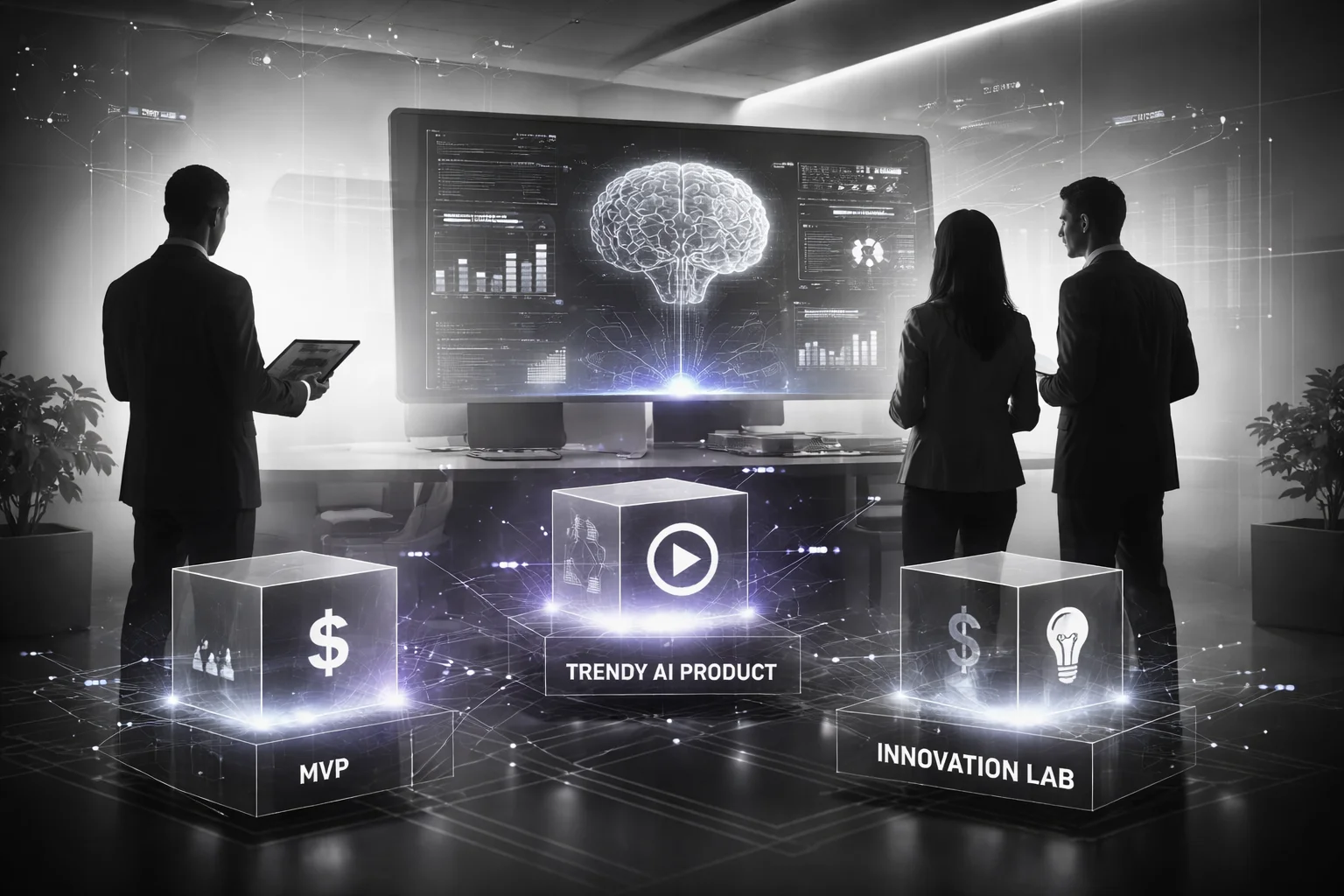
I’d look elsewhere if your priority is:
- Ultra-low-cost MVPs where the goal is to kill weak ideas fast
- Consumer apps driven by short-lived generative AI trends
- Loosely defined innovation labs with no clear product owner
- Experimental natural language processing or computer vision demos that don’t need deep integration
- Quick-hit machine learning development for marketing tests, not production systems
And yes, that includes some “innovation” programs inside big companies. I’ve seen internal labs ask for custom AI solutions, then spend 11 weeks debating who approves the dataset, who owns the KPI, and whether the pilot should target service ops or procurement. At that point, the vendor isn’t your bottleneck. Your org is.
A different delivery model often works better here. Smaller product studios, lower-cost regions, or lean prototype teams can test ideas faster before you bring in an enterprise AI company Germany for hardening, compliance, or serious predictive maintenance and industrial AI development Germany work.
If you want the blunt version of that tradeoff, read Ai Development Company India Enterprise Playbook.
Because the smartest buyers don’t ask, “Who’s best?” They ask, “Who fits this stage of the mess?”
A Practical Engagement Model for Capability-Matched AI Partner Selection
A practical way to choose an AI development company Germany is to start with failure cost, not vendor fame. Pick the team whose strengths match your risk, data, and operating environment. That's the filter that saves money.
I’ve seen buyers do the opposite. They fall for the polished logo wall, the big-name references, the whole “surely this famous shop can do our project too” routine, and six months later they’re stuck with a bloated scope that solved the wrong problem.
Start with business risk.
If a bad model output can stop a production line, trigger a compliance issue, or mislead service staff, you need a partner built for control-heavy delivery. That usually points you toward an enterprise AI company Germany or an AI consulting company Germany with real governance muscle. If the downside is just a weak pilot and a bruised ego, keep the engagement lean. I know that sounds obvious, but people skip it constantly.
Then look at the work itself.
A document workflow with natural language processing is not the same animal as computer vision on a factory line. Predictive maintenance tied to sensor data, MES inputs, and ugly real-world failure patterns needs a different bench than a customer-service assistant. I’d map project type to demonstrated German strengths: industrial systems, regulated environments, and serious machine learning development inside existing operations.
And don't accept vague proof.
Ask for evidence that sounds annoyingly specific. What data did they use? What broke in deployment? Who reviewed low-confidence outputs? A credible German AI development company should be able to explain shipped custom AI solutions in plain English, not hide behind architecture diagrams (which, honestly, are sometimes just decorative wallpaper).
Scope is where deals go sideways.
I’d force one of three choices: paid discovery, proof of concept, or production build. Not all three at once. An AI software development Germany partner that can't define entry criteria, success metrics, and handoff responsibility will create expensive fog. I've watched that happen, and it's irritatingly common.
So your final justification should be boring. Good. “We chose this vendor because they’ve delivered similar risk-weighted work in our context” is a far better reason than “they seemed prestigious.” If you want a sharper version of that argument, read best AI development company fit vs prestige.
The bottom line? Choose relevance over reputation. Every time.
FAQ: AI Development Company Germany
What does an AI development company in Germany offer?
An AI development company Germany typically offers strategy, data assessment, proof of concept work, model development, deployment, and ongoing MLOps support. In practice, that means things like machine learning development, computer vision, natural language processing, AI integration services, and custom AI solutions built around your actual workflows. The good firms also handle the messy parts, like enterprise data security, GDPR-compliant AI design, and on-premise deployment when cloud isn’t an option.
How do I choose the best AI development company in Germany?
Start with use-case fit, not branding. I’d look for a team that has shipped projects in your industry, can explain its delivery process clearly, and asks hard questions about data quality before promising results. If a German AI development company jumps straight to model talk without discussing integration, compliance, and business KPIs, I’d move on fast.
Why is Germany a strong market for industrial AI projects?
Germany is a strong market for industrial AI because it combines manufacturing depth, engineering culture, and high demand for automation. According to the ifo Institute, 70.4% of companies in Germany’s automotive industry use AI, and more than 40% of manufacturing companies now do too. That creates a practical environment for predictive maintenance, computer vision inspection, and factory-floor AI that has to work in the real world, not just in a slide deck.
Can a German AI development company help with GDPR-compliant AI solutions?
Yes, and this is one of the biggest reasons buyers choose local partners. A serious AI consulting company Germany should know how to design around data minimization, access controls, auditability, and deployment choices that reduce privacy risk. I’ve seen this matter most in healthcare, finance, HR, and any setup where personal or operationally sensitive data can’t be treated casually.
Does hiring an AI development company in Germany cost more than offshore options?
Usually, yes. German teams often cost more upfront than offshore vendors, but they can save you money if your project needs tight compliance, senior engineering input, and fewer communication gaps. Cheap AI builds are famous for turning into expensive rewrites, which is why I’d never judge AI software development Germany on hourly rate alone.
Is Germany the right choice for privacy-critical AI development?
For privacy-critical work, Germany is often a very smart choice. You’ll usually find stronger alignment around GDPR, enterprise procurement standards, and private infrastructure requirements than with generalist vendors chasing volume. If your project involves regulated data, internal IP, or strict enterprise data security rules, I’d put Germany high on the shortlist.
What industries do German AI development companies specialize in?
Most strong firms in this market focus on manufacturing, automotive, logistics, healthcare, industrial equipment, and enterprise software. You’ll also see solid work in customer service automation, document processing, and industrial AI use cases tied to predictive maintenance and quality control. According to the Statista market outlook, healthcare, support functions, edge AI, and AI tied to IoT are major trends in Germany.
What should I look for when evaluating an AI development company in Germany for industrial AI projects?
Look for proof they can handle messy operational data, legacy systems, and deployment constraints on the shop floor. A real industrial AI development Germany partner should understand sensor data, latency limits, model monitoring, and how to connect AI outputs to existing MES, ERP, or maintenance systems. If they’ve never dealt with on-premise environments or production downtime risk, that’s a red flag.
How do German AI vendors typically structure discovery, proof of concept, and production engagements?
Most follow a three-step path: discovery, proof of concept, then production rollout. Discovery covers business goals, data checks, architecture, and feasibility; the proof of concept tests whether the idea works with your data; production adds integration, security, monitoring, and support. I like this model because it cuts the fantasy early, before you burn six months on an AI idea that was never viable.
What common mistakes do buyers make when hiring an AI development company in Germany?
The biggest mistake is buying a polished pitch instead of a delivery team. Buyers also underestimate data preparation, ignore AI partner selection criteria, and treat compliance as paperwork instead of a design requirement. According to the OECD, data quality and availability remain real constraints in Germany, and honestly, that issue kills more projects than model choice does.