Enterprise Chatbot Development That Puts Security and Governance First
Reframe enterprise chatbot development as a security, integration, and governance challenge. Learn how to design enterprise-grade chatbots that IT trusts.
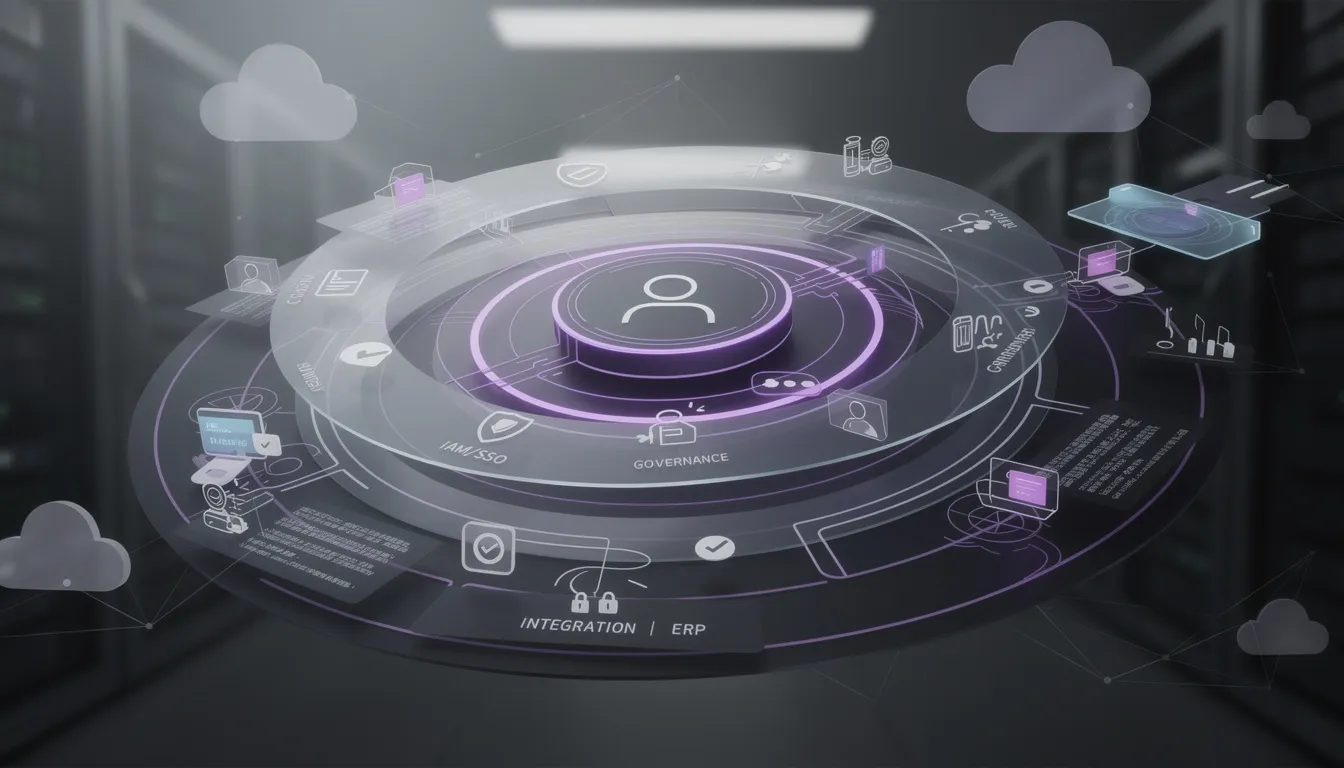
Most “AI-powered” chatbots in large organizations don’t fail because the model can’t understand users. They fail because security architecture, integration, and governance were treated as afterthoughts in enterprise chatbot development. The hard problem isn’t getting a bot to respond; it’s making an enterprise chatbot fit a complex, risk-sensitive environment without becoming the newest security incident or compliance headache.
Consumer-grade bots can live happily as islands. Enterprise chatbot development lives or dies by how well you handle IAM and SSO, tie into ERP/CRM/HR, satisfy data privacy and audit requirements, and convince security that this won’t punch a hole straight through your defenses. Many promising pilots die in week three of the security review, or the first time someone tries to connect to a real system of record.
In this guide, we’ll treat enterprise chatbot development as what it really is: an enterprise architecture, security, and governance challenge. We’ll walk through concrete architectures, integration patterns, and governance checklists you can put in front of IT and security today. And we’ll show how partners like Buzzi.ai build compliant, integrated, enterprise-grade chatbots across web, mobile, and WhatsApp—without asking you to bet the company on a flashy demo.
What Makes a Chatbot Truly Enterprise-Grade?
Consumer Chatbot vs Enterprise Chatbot: Different Game
The easiest way to see what “enterprise-grade” really means is to compare it to a consumer chatbot. A consumer chatbot—say, the bot on a retail website—usually sits on a public site, touches limited data, and has almost no formal compliance burden beyond basic privacy notices. If it goes down or leaks a generic FAQ, it’s embarrassing, but rarely existential.
An enterprise chatbot is playing a different game. It often sits inside your corporate network or in a tightly controlled SaaS, touches HR records, financial data, contracts, or operational systems, and must align with identity and access management (IAM), single sign-on (SSO), role-based access control (RBAC), and formal IT security policies. It is, in practice, another application tier that has to behave like any other mission-critical internal system—even if it looks like a friendly chat bubble.
This is why assessing an enterprise chatbot only on its conversational AI quality is dangerous. A slick demo that answers questions well but ignores authentication, authorization, logging, and data minimization is not a prototype; it’s a proof-of-concept for a future incident report. Enterprise chatbot development has to start with the realities of your stack and controls, not with the coolest dialog feature.

Four Dimensions of Enterprise-Grade
It helps to think of an enterprise-grade chatbot along four dimensions: Security, Integration, Governance, and Operations/SLAs. Most pilots obsess over the narrow question: “Does the bot understand what users are saying?” That maps almost entirely to just one dimension: conversational capability.
Security covers security architecture and data protection: IAM integration, SSO, RBAC, data encryption, secrets management, network boundaries, and adherence to IT security policies. Integration is about deep enterprise integration with ERP, CRM, HR, and other systems—through governed APIs, ESBs, or iPaaS—rather than brittle screen-scraping or direct database access. Governance covers risk management, compliance requirements, ownership, and decision rights: who approves what, under which policies, with which controls.
Operations and service-level agreements (SLAs) are the fourth leg of the stool: uptime, performance, on-call, incident response, change management, and KPIs like containment rate and time-to-resolution. Many enterprises see pilots that perform beautifully in a lab but ignore three of these four dimensions, then stall during go-live because operations, security, or compliance veto the project.
Why Advanced NLP Isn’t Enough
Modern language models and conversational AI platforms are remarkable, and you absolutely need robust NLP for a good user experience. But for enterprises, NLP quality is necessary and nowhere near sufficient. The best dialog system in the world still fails if it cannot respect IAM policies, RBAC constraints, and governance, risk and compliance (GRC) rules.
We’ve seen this pattern repeatedly: a team runs a PoC with impressive conversational quality, shows it to executives, and gets thumbs-up to “move to production.” Then security steps in and asks basic questions: How is identity verified? Where is data stored? How is access logged? What’s the incident response plan? The answer, too often, is that none of this was designed yet.
In enterprise chatbot development services, the hard part is not answering questions—it’s answering them without violating your own security and governance rules.
An enterprise-grade chatbot has security and governance designed into its architecture from day one. Exotic AI features come later, when the foundation can support them.
Security Architecture for Enterprise Chatbot Development
Core Security Principles for Enterprise Chatbots
If you’re designing security architecture for chatbots, the good news is you don’t need brand-new principles. The same fundamentals apply: least privilege, a zero-trust mindset, data minimization, and defense-in-depth. The difference is how you apply them to an interface that feels “informal” but is in fact exposing powerful capabilities.
Least privilege and zero trust mean the chatbot should never talk directly to critical databases or internal systems. Instead, it should call tiered services or APIs that enforce security policies, rate limits, and validations. Data minimization means the chatbot sees only what it needs, for as short a time as possible, instead of holding broad access to everything “just in case.” Defense-in-depth means you assume any one layer can fail, so IAM, network controls, application-level checks, and monitoring all reinforce each other.
In a secure flow, a user’s query doesn’t go straight from the chat UI to your ERP. It first passes through an authenticated session, is mapped to a specific intent with permitted actions, and then hits a governed API that ensures the user is allowed to do that thing. These are classic enterprise architecture patterns—you’re just applying them to conversational UX.
Identity and Access Management: IAM, SSO, and Identity Federation
For enterprise chatbot development, identity and access management (IAM) is the backbone of trust. Your chatbot should integrate with existing IAM providers like Azure AD, Okta, or similar directories rather than inventing its own identity store. That usually means implementing single sign-on (SSO) via SAML or OIDC for web and mobile, and using platform-native identity for channels like Teams or Slack.
A typical architecture: the user signs into your portal or collaboration tool via SSO, the chatbot inherits the authenticated session, and on each request, the bot obtains or validates an access token that encodes the user’s identity and roles. When the chatbot invokes downstream APIs, it passes this token or a service token scoped to the user’s permissions. RBAC is then enforced centrally by your IAM and API layer, not with ad-hoc checks scattered through bot logic.
Identity federation adds another layer when you have subsidiaries, partners, or multiple directories. In that case, your enterprise chatbot has to respect different identity domains and potentially different policies in each. Architectural guidance from IAM providers—such as Azure AD’s application integration docs or Okta’s guides—are essential inputs, not afterthoughts, to your design.

Role-Based Access Control (RBAC) and Data Scoping
Once you trust who the user is, you have to decide what they can see and do. Role-based access control (RBAC) and attribute-based access control (ABAC) are how you map enterprise policies into chatbot behavior. Instead of treating the chatbot as a generic “system user,” you treat it as a UI that always acts on behalf of a specific human identity with defined roles and attributes.
In practice, this means the chatbot dynamically scopes which records, fields, and actions are available. An HR chatbot might let a manager see performance data only for their direct reports; a misconfigured bot might reveal salary bands for the entire company. A finance chatbot might allow viewing of invoices but only permit approvals within a user’s delegated authority.
Ignoring RBAC in conversational interfaces is one of the fastest ways to create accidental data leakage. Users will naturally try things they’d never do in a traditional ERP interface because chat feels harmless. Your enterprise-grade chatbot has to be more disciplined than they are.
Encryption, Network Boundaries, and Secrets Management
Strong data encryption is table stakes: TLS in transit, encryption at rest for logs and storage, and proper key management with HSMs or cloud KMS. But for secure enterprise chatbot development, you also need to think about network boundaries. Which components live in which VPCs or VNets? Which talk over private endpoints or VPNs? What can reach the public internet, and why?
A common pattern is a SaaS or cloud-hosted conversational AI engine fronting only a well-governed API gateway that exposes selected services from on-prem or private cloud. The chatbot never knows where the ERP or HR system really lives; it just calls APIs that enforce authentication, authorization, throttling, and auditing. This hybrid approach gives you the flexibility of a SaaS front-end with the control of private backends.
Secrets management is the other half of the story. API keys, OAuth client secrets, certificates, and database credentials should live in a proper secrets manager, not in configuration files or code. This is standard in modern enterprise architecture patterns, but it becomes critical when your chatbot potentially orchestrates access to multiple sensitive systems.
Compliance and Governance for Enterprise Chatbots
Map Chatbots to Existing Governance, Risk, and Compliance (GRC)
Many organizations treat chatbots as a special innovation track, separate from existing governance. That’s exactly backwards. Chatbot governance should plug into the same governance, risk and compliance (GRC) frameworks you already use for other applications—risk registers, control catalogs, and change management processes.
In a mature setup, the enterprise chatbot is just another asset in your corporate governance framework, with documented owners in the business, IT, and security. Its risks are logged in the GRC tool, with mapped controls: IAM integration verified, data retention policy in place, logging hooked into SIEM, incident response runbooks defined. You don’t need a brand-new governance process; you need to make sure the chatbot is visible to the existing one.
Ownership is where many pilots stall. Is the chatbot “owned” by HR, IT, a digital transformation team, or security? The right answer is usually shared: business owns outcomes and content; IT owns architecture and operations; security owns policies and risk oversight. Clarifying this early avoids painful debates at go-live.
Key Regulatory and Policy Requirements
Regulatory frameworks like GDPR, SOC 2, and HIPAA don’t mention chatbots explicitly, but their compliance requirements absolutely apply. For a GDPR compliant chatbot, you need lawful basis for processing, clear consent where applicable, data minimization, and the ability to honor data subject rights like access, rectification, and erasure. The same logic applies to sectoral rules like HIPAA in healthcare or PCI concerns in payments.
Chatbots introduce nuances around automated decision-making and profiling. EU guidance on GDPR and automated decision-making, for example, clarifies when human review is required and how to explain decisions to users; see the EDPB’s guidance and official commentary on GDPR data protection. Your legal and DPO teams should be involved early to interpret how these apply to conversational flows.
Internal security standards matter as much as external ones. You may require SOC 2 Type II for any SaaS handling certain classes of data, or enforce strict data residency. Understanding SOC 2 chatbot requirements and referencing reputable overviews like the AICPA’s SOC resources or well-regarded summaries from firms such as ISACA helps you frame vendor evaluations in the language auditors speak.
Audit Logging, Monitoring, and Incident Response
From a governance perspective, auditability is non-negotiable. Audit logging for chatbots should capture which authenticated user did what, when, through which channel, and which backend calls the bot made on their behalf. Error conditions, policy denials, and unusual behavior should also be logged.
Those logs shouldn’t sit in a silo. They should integrate with your existing SIEM/SOC tooling (Splunk, Elastic, Azure Sentinel, etc.) so security operations can monitor, correlate, and alert on suspicious patterns. That might include repeated failed access attempts via the chatbot, or unusual spikes in sensitive queries.
Incident response should also extend to chatbot channels. If you suspect account takeover or misuse through the bot, can you revoke tokens, disable particular capabilities, or temporarily shut off high-risk intents? The right answer looks a lot like your existing incident response playbooks; the chatbot is just another entry point you can investigate through logs and monitoring.

Enterprise Chatbot Integration with Existing Systems
Integration Patterns: API, ESB, and iPaaS
Once security and governance are in place, integration becomes the next major determinant of success. In practice, most enterprise chatbot integration with existing systems follows three dominant patterns: direct API-based integration, integration via an enterprise service bus (ESB), or via an integration platform as a service (iPaaS).
Direct API integration is the cleanest for modern systems: the chatbot calls a set of well-documented, governed APIs. ESB-based integration is common in older architectures where systems already publish services on the bus. iPaaS sits somewhere between, offering pre-built connectors, transformation, and orchestration capabilities, often with strong logging and governance features.
The anti-pattern to avoid is direct database access from the chatbot layer. It bypasses governance, makes security reviews painful, and creates tight coupling. Authoritative sources on enterprise integration patterns—like classic API gateway best practices or well-regarded articles on avoiding direct database access from front-ends, such as Martin Fowler’s work on microservices and integration—provide a useful mental model here.
Connecting Chatbots to ERP, CRM, and HR Systems
Most high-value enterprise chatbot use cases involve ERP, CRM, or HR: checking order status, approving purchase orders, updating CRM records, requesting HR documents, or answering policy questions. The key is to respect existing workflows and approval chains rather than inventing parallel ones. The chatbot becomes a more usable front-end to the same processes, not a bypass.
Imagine a manager approving a purchase order. In a well-architected flow, the chatbot interprets the request, confirms identity and role, and then calls the same approval API used by your ERP UI. The ERP logs the approval, triggers notifications, and enforces limits. If the manager lacks authority, the chatbot explains that and perhaps routes the request to the right approver.
Idempotency and transactional integrity also matter. If the network blips after the chatbot calls the ERP, will it retry safely, or accidentally approve the same order twice? Designing idempotent APIs and using correlation IDs between chatbot and backend calls is crucial for reliable enterprise chatbot integration with existing systems.
Dealing with Legacy and On-Premise Systems
Most enterprises don’t have the luxury of greenfield systems everywhere. Legacy and on-premise systems carry huge amounts of business logic and data, but they weren’t built with conversational interfaces in mind. That’s where middleware, API wrappers, and data virtualization come in.
A common pattern is to wrap a legacy HR or ERP system in an API layer that translates chatbot-friendly calls into whatever the legacy system expects. That wrapper can live on-prem behind a VPN or private link, with the chatbot front-end in the cloud. Security policies are enforced at the API edge, not at the chatbot itself.
This improves both legacy systems integration and risk management: you can monitor and limit what the chatbot can ask the legacy system to do. It also provides a path to modernization, since other front-ends can reuse the same APIs. Latency and reliability remain constraints, so you’ll need timeouts, retries, and good user feedback for slow or failing backends in your enterprise chatbot development services.

Multi-Channel Consistency Across Web, Mobile, and WhatsApp
Users don’t care whether they’re talking to a bot on web, mobile, Teams, or WhatsApp—they care that they get consistent, correct answers. Architecturally, that means business logic and integration should live in shared services, not in each channel-specific implementation. Channels become thin shells that handle UI and channel-specific quirks, while core logic lives in a common layer or orchestration service.
For example, a customer might check order status via a web chatbot in the morning and via WhatsApp in the afternoon. Both should hit the same APIs, apply the same RBAC rules, and honor the same SLAs. Platforms like Buzzi.ai focus heavily on WhatsApp AI and voice interfaces in emerging markets, but the underlying pattern is consistent: one engine of truth, many channels.
This is also where a robust conversational AI platform shines, allowing you to model intents and flows once and reuse them across channels. It’s not just about convenience; it’s about maintaining integrity and auditability across your entire conversational surface area.
Deployment Models and Their Security Trade-Offs
On-Premise and Private Cloud
Deployment choices are really risk and control trade-offs. On-premise deployment or tightly controlled private cloud offers maximum control over data residency, network boundaries, and integration. For industries like financial services or government, this can be non-negotiable.
The trade-off is cost and agility. You own patching, scaling, and high availability; you need teams who understand both AI components and your infrastructure. For secure enterprise chatbot development for financial services, for instance, private cloud often wins on compliance but loses on speed of innovation unless automation and DevOps disciplines are strong.
SaaS and Hybrid Architectures
SaaS deployment models are attractive because they offer faster time-to-value, managed security for the platform itself, and easier access to continuous improvements. But enterprises must examine data flows, tenant isolation, certifications, and incident response commitments carefully. A SaaS chatbot that can’t meet your data privacy compliance needs isn’t really an option.
Hybrid deployments often strike the right balance: the conversational AI engine runs as a SaaS, but sensitive data and business logic stay in your VPC or on-prem. The SaaS front-end talks to private APIs via VPN, private link, or similar secure channels. When evaluating enterprise chatbot development services, it’s worth asking not just “Do you support hybrid?” but “Show us the reference architecture and threat model for hybrid in our industry.”
Governance Checklists for Enterprise Chatbot Development
Security and IAM Checklist
Security teams don’t want novels; they want concrete checks they can validate. A pragmatic checklist for IAM and security might include:
- Identity and access management (IAM) integration validated with your primary directory (Azure AD, Okta, etc.).
- Single sign-on (SSO) implemented via SAML/OIDC for all internal-facing channels.
- Role-based access control (RBAC) mapped from IAM roles/groups to chatbot capabilities and data scopes.
- Data encryption enforced in transit (TLS 1.2+) and at rest, with keys in approved KMS/HSM.
- Secrets stored in an approved secrets manager; no credentials in code or config.
- Network boundaries documented: which components run where, with which allowed inbound/outbound connections.
- Logging integrated with SIEM for security events and privileged actions.
Each of these can be framed in language security architects recognize: “IAM integration: configured and tested,” “Logging: integrated with Splunk, alert rules defined,” and so on. This makes security review an exercise in verifying that standard enterprise controls are in place, rather than debating chatbot-specific edge cases.
Compliance and Data Protection Checklist
On the compliance side, you can think in terms of laws, internal policies, and data flows. A checklist for how to build an enterprise chatbot with governance and compliance in mind might include:
- Legal bases and notices documented for all personal data processed by the chatbot.
- GDPR compliant chatbot design: DSRs (access, deletion, rectification) supported via existing processes.
- SOC 2 chatbot requirements mapped: security, availability, confidentiality controls documented and, where relevant, aligned with vendor reports.
- Data retention policies defined per data class and implemented in logs and storage.
- Cross-border data transfers assessed and documented, with appropriate safeguards.
- Automated decision-making and profiling when applicable documented and reviewed by legal/DPO.
These items should connect back into your existing governance, risk and compliance (GRC) tooling. For each, you can create a control, map it to the chatbot asset, and record assessments. If you want support turning this into a structured program, Buzzi.ai’s architecture-focused AI discovery engagement is designed exactly for this kind of review.
Integration, SLAs, and Operational Readiness Checklist
Finally, operational readiness is where many “successful” pilots quietly die. A checklist focused on integration, SLAs, and operations might include:
- Documented integration patterns (API, ESB, iPaaS) and avoidance of direct DB access.
- Non-production environments mirroring key integrations for safe testing.
- Defined service-level agreements (SLAs) for uptime, latency, and error budgets.
- Runtime KPIs defined: resolution rate, containment rate, time-to-first-response, success rate of backend calls.
- Runbooks in place for incident response, capacity issues, and degraded dependencies.
- Support ownership defined (L1, L2, L3) across business, IT, and vendor teams.
These are the same disciplines you apply to any critical service. For many organizations, explicitly stating them in the context of enterprise chatbot development services is what allows IT and security to say “yes” instead of “maybe later.”
Evaluating Enterprise Chatbot Platforms and Vendors
Beyond Demos: Questions for Security and Architecture
Vendor demos are optimized to show you delightful conversations, not security posture. To move beyond surface impressions, you need a structured set of questions that probe security architecture and integration. For example:
- How does your platform integrate with our IAM and SSO? Do you support specific SAML/OIDC flows we use?
- How is RBAC enforced—by your platform, by our APIs, or both?
- Where is data stored and processed? How is it encrypted? Which regions are available?
- What logs do you produce, and how do they integrate with our SIEM?
- What certifications do you hold (SOC 2, ISO 27001, HIPAA, etc.)?
When a vendor says “we support SSO,” turn that into very specific questions: “Do you support SP-initiated SAML with Azure AD, with role claims mapped from groups?” or “Can we enforce MFA before access to certain intents?” Evaluating enterprise chatbot development services means validating not just capabilities, but the maturity of their documentation, reference architectures, and willingness to co-design within your constraints.
Fit with Your Governance and Integration Strategy
The right vendor is one that fits your governance and integration ecosystem, not just your feature wish list. That means being able to integrate with your GRC platform for risk tracking, your IAM stack for roles and policies, your ESB or iPaaS for controlled enterprise integration, and your monitoring systems for end-to-end visibility. It also means being comfortable working with security and compliance as first-class stakeholders.
In a good evaluation process, IT, security, and business all sit at the table. Security asks about controls and certifications, IT digs into enterprise architecture patterns and integration, and business validates that the solution actually improves workflows. At Buzzi.ai, we design our enterprise chatbot and virtual assistant development services around that reality: no one wants another “innovation” project that won’t pass a serious review.
Conclusion: Make Security and Governance Your Advantage
When you step back, a pattern emerges. The success of enterprise chatbot development is determined far more by security, integration, and governance than by conversational flair. The bots that persist are the ones that IT and security teams are comfortable owning, not just the ones users initially enjoy.
Enterprise-grade chatbots tie deeply into IAM, SSO, RBAC, and governed APIs for ERP, CRM, and HR systems. Compliance, audit logging, and monitoring plug directly into existing GRC and SOC tools, rather than living off to the side. Clear checklists give everyone—from architects to CISOs—a shared language to evaluate risks and readiness.
If your current chatbot initiative is stalling at security review or feels like a governance risk, that’s a signal, not a failure. It’s an opportunity to redesign your approach with architecture and governance at the center. We’d be happy to help you turn a fragile pilot into an IT-approved, security-aligned program through a focused discovery or assessment—starting from the stack and controls you already trust, and ending with a conversational interface your users actually want to use.
FAQ: Enterprise Chatbot Development, Security, and Governance
What makes a chatbot truly enterprise-grade instead of just a smart FAQ bot?
An enterprise-grade chatbot goes far beyond answering FAQs. It integrates with IAM, SSO, and RBAC so it knows who the user is and what they’re allowed to do, and it connects to systems like ERP, CRM, and HR through governed APIs. It also meets compliance requirements, has robust audit logging and monitoring, and is run with clear SLAs and operational ownership.
How do we design security architecture for enterprise chatbot development?
Start by applying standard security principles—least privilege, zero trust, data minimization, and defense-in-depth—to the chatbot as if it were any other application tier. That means no direct database access, strict IAM and SSO integration, well-scoped APIs, strong encryption, and secrets in a proper vault. Design for end-to-end observability and incident response from day one, not as a post-launch patch.
How should an enterprise chatbot integrate with IAM, SSO, and RBAC?
The chatbot should reuse your existing identity infrastructure rather than creating new accounts and passwords. Typically, you authenticate users via SSO (SAML/OIDC) and have the chatbot inherit the authenticated session or token. RBAC is then enforced either at the API gateway or within backend services so that whatever actions the bot performs are always constrained by the user’s roles and permissions.
What governance and compliance requirements apply to enterprise chatbots?
Enterprise chatbots must respect the same governance, risk, and compliance frameworks as other systems—GDPR, SOC 2, HIPAA where relevant, and your internal security policies. This includes lawful basis for processing, consent where appropriate, data minimization, and honoring data subject rights. Governance also means clearly defined ownership across business, IT, and security, with risks and controls tracked in your GRC platform.
How do we implement audit logging and monitoring for chatbot interactions?
Design logging so every meaningful interaction is attributable to an authenticated user, with timestamps, channels, and backend calls recorded. Feed these logs into your SIEM so security teams can detect anomalies, correlate with other events, and trigger alerts. Treat the chatbot as another critical entry point in your monitoring and incident response playbooks, with the ability to revoke access or disable sensitive intents if needed.
Which integration patterns work best to connect chatbots with ERP, CRM, and HR systems?
The most sustainable pattern is API-based integration, potentially mediated by an ESB or iPaaS if that’s how your architecture is organized. The chatbot should call governed services that encapsulate business logic and enforce security, rather than reaching directly into databases. For complex landscapes, wrapping legacy systems in modern APIs gives you a clean contract and better observability while keeping risk in check.
How do deployment models (on-prem, cloud, SaaS) affect chatbot security and compliance?
On-premise and private cloud deployments maximize control over data residency and network boundaries but increase your operational burden and responsibility for security updates. SaaS models offload much of the platform security and scaling but require careful assessment of certifications, data flows, and tenant isolation. Hybrid approaches often combine a SaaS conversational layer with private APIs and data stores, balancing agility and compliance.
What checklists should IT and security teams use before approving an enterprise chatbot?
At minimum, teams should review IAM and SSO integration, RBAC design, encryption and secrets management, network boundaries, logging and SIEM integration, data retention policies, and incident response plans. They should also validate integration patterns with ERP/CRM/HR, defined SLAs and KPIs, and clear ownership across support tiers. Turning these into a standard checklist or control set makes approval faster and more predictable.
How can we evaluate enterprise chatbot vendors on security and governance, not just NLP?
Ask vendors for detailed documentation on IAM and SSO integration, RBAC enforcement, logging, and data residency, along with evidence of certifications like SOC 2 or ISO 27001. Probe how they integrate with your GRC and monitoring tools and request reference architectures tailored to your stack. You can also work with partners like Buzzi.ai that focus explicitly on secure, governed deployments rather than demo-only prototypes—our enterprise chatbot and virtual assistant development services are built that way by default.
Why do so many enterprise chatbot projects stall after successful pilots?
Most pilots optimize for conversational wow-factor and ignore security, integration, and governance until it’s too late. When they hit formal reviews, gaps in IAM, RBAC, logging, compliance, and operational readiness emerge, and fixing them requires fundamental redesign. Successful programs invert the process: they design for security and governance first, then scale up the conversational experience on top of that solid foundation.