Computer Vision Development Services Built for the Real World
Choose computer vision development services that prioritize application-first design, model selection, and robust edge deployment—not just model accuracy demos.

Most computer vision development services don’t fail because the models are bad. They fail because the application, workflow, and edge deployment around those models are an afterthought. In 2025, the leverage has shifted: the hard part isn’t squeezing another 1% accuracy out of a network, it’s designing application-first systems that survive latency constraints, harsh environments, and messy human operations.
If you’ve ever watched an impressive PoC video in a slide deck and then seen the real system stall, misfire, or get quietly shelved in production, you know this gap firsthand. On paper, the model hit benchmark targets; on the factory floor or in the store, everything fell apart. The truth is that modern computer vision is roughly 20% model work and 80% product design, integration, MLOps, and edge deployment.
In this article, we’ll unpack why so many initiatives stall, what application-first computer vision development actually looks like, how to think about model selection pragmatically, and how to evaluate partners who claim they can deliver. Along the way, we’ll show how to recognize truly production-ready computer vision versus polished demos. We’ll also outline how we at Buzzi.ai approach this as an application-first, edge-focused partner that treats models as components—not the product.
Why Most Computer Vision Development Services Fail in Production
The uncomfortable reality is that many vendors can show you a slick demo but can’t sustain a live deployment. This is why most computer vision development services fail in production despite apparently strong R&D. Market analyses from firms like McKinsey and Gartner routinely note high PoC success rates contrasted with far lower production adoption for computer vision initiatives.
The Model-Centric Illusion
A lot of vendors still sell computer vision like it’s 2015: impressive deep learning model R&D, diagrams of proprietary architectures, and accuracy numbers on curated benchmarks. That story sounds compelling, especially if you’re not living in the data center but in a warehouse, retail floor, or vehicle fleet. The problem is that these metrics often have only a weak relationship with performance under real-world constraints.
In research, the incentive is prestige: publish a new architecture, beat a benchmark, push state of the art. In production, the incentive is reliability: the system must work on cheap cameras, under bad lighting, with motion blur, partial occlusion, dirty lenses, and human workarounds. Academic work has repeatedly shown large gaps between benchmark accuracy and robustness in the wild—for instance, small shifts in lighting or viewpoint dramatically degrade performance compared to lab conditions, even when accuracy looks great on paper.
Consider a retail loss-prevention PoC. The vendor trains a model on curated past footage: ideal camera angles, centered subjects, well-lit aisles. In the lab, the model shines. Then it hits real stores: endcaps block views, cameras are mounted too high or at odd angles, shoppers cluster around, trolleys obscure key frames, and the store occasionally runs half-lit at night. What looked like a success suddenly turns into constant false alarms and missed events. This isn’t a failure of deep learning in general; it’s a failure of production-ready computer vision design and proper robustness evaluation.
This is where strong computer vision consulting services for model selection differ from model-centric vendors: they don’t treat architecture choice as the hero. Instead, they treat it as one decision inside a system that has to survive messy inputs and operational constraints.
The 80/20 Reality of Modern Computer Vision Work
Today, the raw modeling layer is increasingly commoditized for many use cases. You have foundation-model-based APIs, pre-trained detectors and segmenters, and well-documented open-source backbones. That doesn’t mean modeling is trivial—but it does mean it’s rarely the long pole in the tent for enterprise projects.
The real work looks more like this: perhaps 20% on model selection and fine-tuning, and 80% on application-first design, integration, MLOps for vision, and edge engineering. Most of the calendar time and cost lives in data pipelines, labeling operations, streaming video ingestion, latency and throughput tuning, GPU/ASIC utilization, UI/UX, alert routing, observability, and model lifecycle management.
If you drew it as a pie chart in your head, the thin slice is the neural network; the thick slice is everything around it: how frames are sampled, how predictions are post-processed into decisions, how humans verify edge cases, how updates roll out to devices, and how the business measures value. That’s where many computer vision development services are structurally weak, because those capabilities live outside a traditional "data science" team.
For most enterprises, therefore, a marginal bump in benchmark accuracy matters less than guaranteed latency, uptime, maintainability, and workflow fit. A model that is 2% less accurate but 3x faster, cheaper, and easier to debug can deliver far more business value.
From Demo to Disaster: Common PoC-to-Production Pitfalls
The path from an impressive demo to a reliable deployment is where many projects die. The patterns are remarkably consistent across industries and geographies.
First, problem definitions are often unbounded. "Detect all defects" or "flag all suspicious behavior" sounds reasonable, but it hides edge cases and tradeoffs. Second, PoCs are usually trained and tested on unrealistically clean, limited data—often from a single site, camera angle, or time of day. Third, hardware constraints are ignored: a model tested on a powerful cloud GPU is expected to run at 30 fps on a low-cost edge box.
Fourth, there’s no observability or retraining plan. Once the system goes live, no one can see where it’s failing, which frames are problematic, or how performance drifts as conditions change. Finally, there’s no thought-out pilot-to-production rollout: the same fragile PoC stack is simply "scaled up" without hardening.
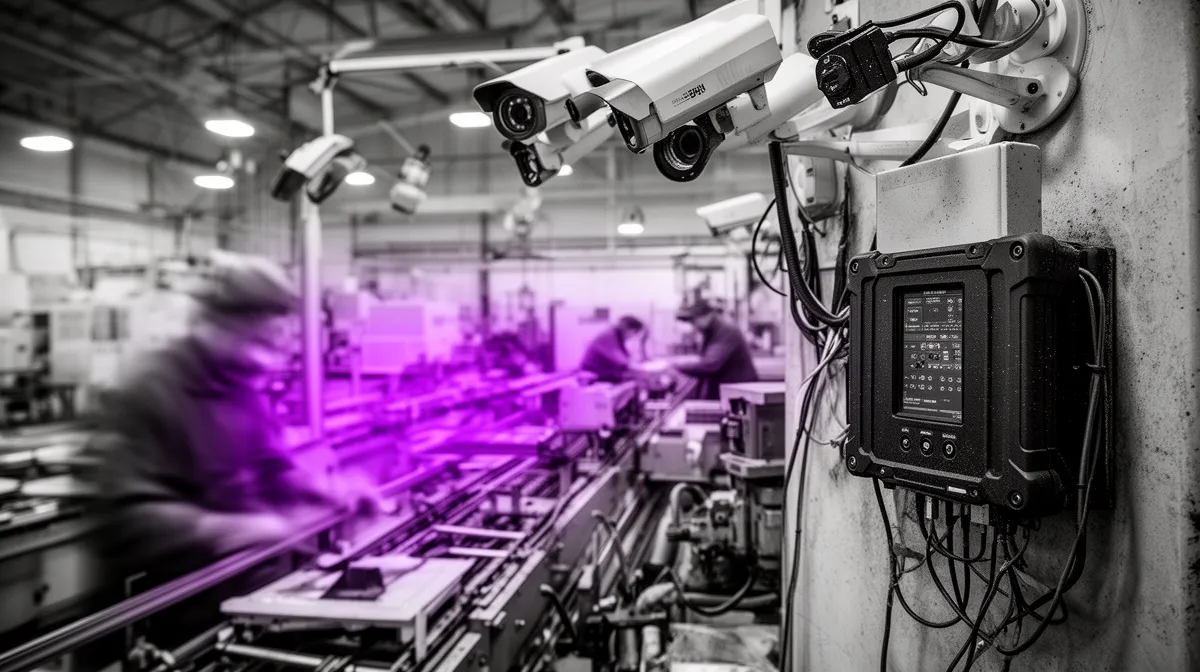
Imagine a manufacturing quality-inspection PoC that works beautifully on a single line with stable overhead lighting and fixed camera mounts. When expanded to multiple lines, some stations have different luminance, others have vibration-induced blur, and one site installs cameras at a different height to avoid existing machinery. The result: wildly inconsistent performance. This doesn’t just hurt outcomes; it erodes trust in automation.
These are methodological gaps, not just technical difficulty. Vendors that design for computer vision PoC-to-production from day one explicitly address these issues: they bound the problem, plan for varied data, respect hardware, and build a pilot to production rollout path into the engagement.
What Application-First Computer Vision Development Looks Like
If most failures come from treating models as the center of the universe, the alternative is obvious: treat the application as the product. An application-first computer vision development company starts from workflows, users, and constraints, then works backwards to architecture and models. In that direction, the design surface becomes far clearer—and so do tradeoffs.
Start From the User Workflow, Not the Model
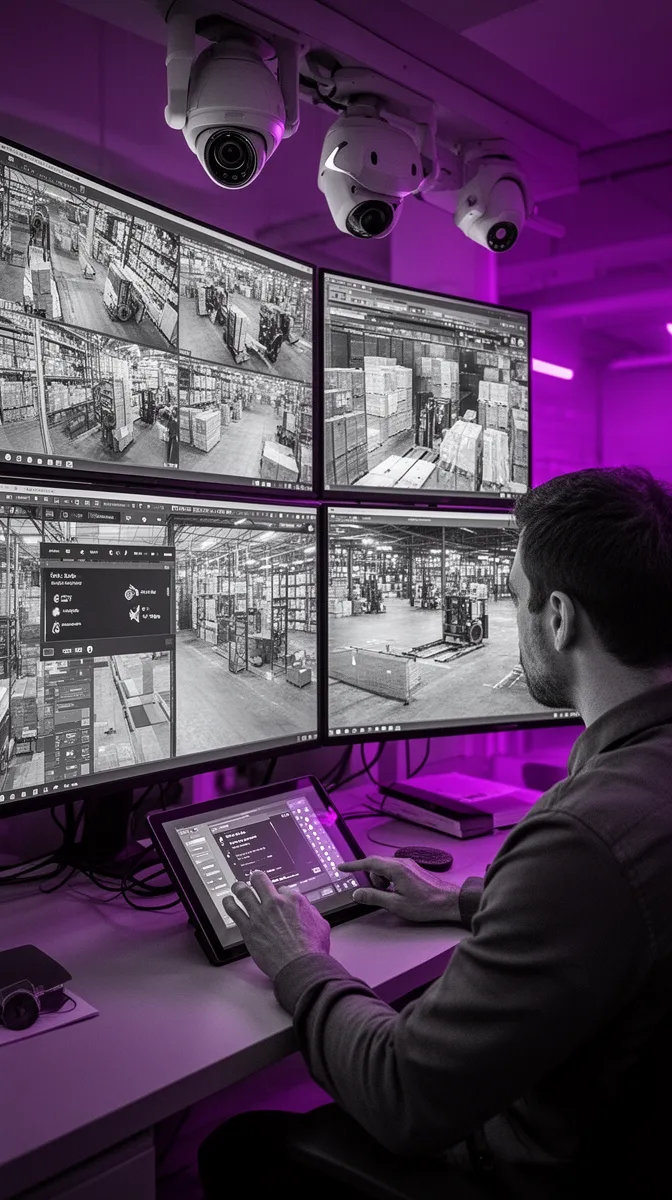
Application-first design means you map decisions, workflows, and stakeholders before you talk about networks or GPUs. You identify who sees which alerts, how they respond, what happens on false positives and false negatives, and what "good enough" looks like in specific scenarios. This is the core of modern AI product design for vision-based systems.
In practice, that means diagramming user journeys and edge cases. For example, a logistics loading-dock monitoring solution doesn’t start with "detect trucks and pallets." It starts with: the dock manager needs to know when a dock is idle for more than N minutes; safety teams need to know if forklifts enter a restricted zone; operations needs a daily utilization report. Those requirements then dictate where the computer vision system sits in the workflow and where humans intervene.
Once you’ve defined those journeys, you can design the UI: which frames get captured, what context operators see, how overrides work, and how feedback is logged. A well-designed human-in-the-loop experience is often the difference between a brittle automation system and a robust vision-based automation pipeline. This is where strong enterprise computer vision application design services add disproportionate value.
Translate Business Constraints Into Technical Requirements
From workflows, you move to constraints. KPIs, SLAs, and operating realities translate directly into latency, throughput, and uptime targets. If you can tolerate 500 ms latency for an alert but only 1% missed critical events, that shapes the architecture very differently than a use case that needs 50 ms reaction times.
Hardware constraints matter just as much. Camera resolution, field of view, available hardware acceleration (GPU, TPU, or none), power budgets, and thermal envelopes all narrow the design space. You don’t want to discover at the end that your model can’t run on the chosen edge boxes without expensive upgrades.
Think of a simple table in your head. On one side, business-level metrics: "missed defect rate under 0.2%", "inspection time per unit under 1 second", "no more than 1 false alarm per hour per line." On the other side, technical targets: per-frame latency and throughput, minimum resolution, required fps, and acceptable frame drops. This is what turns "we’d like real-time inference" into something you can engineer and test.
Getting this mapping right is what keeps you from painful redesigns and surprise infrastructure bills later. It’s why application-first design has to happen before you lock in a model or platform.
Iterate With Real-World Data, Not Idealized Datasets
The third pillar is how you handle data. A credible data collection and labeling strategy for vision is specific to deployment environments: actual camera placements, lighting conditions, motion patterns, and occlusion realities. You want data from busy days and quiet days, sunny mornings and rainy nights, clean lenses and slightly dirty ones.
Take a parking-occupancy system. If you only train on dry daytime footage from one lot, you’re guaranteed to fail in snow, heavy rain, night-time glare, or when people park slightly outside marked boundaries. An application-first process starts with a plan: capture data from multiple lots, in all seasons, at different camera heights and angles, then prioritize labeling edge cases.
From there, you build a continuous data flywheel: deployed systems capture tricky frames (low confidence or high disagreement), send them to labeling queues, retrain models, and redeploy. This is model lifecycle management in practice. It matters more than squeezing a few extra points on a static benchmark because the world your model sees keeps changing, even if the benchmark doesn’t.
Smart Model Selection vs Expensive Custom Training
Once you’ve designed the application and understood constraints, you’re finally ready to talk models. Here, the main risk isn’t technical; it’s economic. Without a simple framework, buyers often end up paying for expensive custom work where off-the-shelf or lightly fine-tuned models would deliver better computer vision ROI.
A Simple Model Selection Framework for Buyers
You can think of model selection as a three-way fork: use an off-the-shelf model, fine-tune an existing backbone, or commission a fully custom architecture. Strong computer vision consulting partners will walk you through this explicitly instead of defaulting to custom R&D. The choice should be driven by constraints, not ego.
Key decision criteria include: latency SLAs, device footprint, data uniqueness, IP requirements, update frequency, and regulatory constraints. If your environment and objects are fairly standard and your main challenge is throughput, an off-the-shelf object detector may be ideal. If you have domain-specific nuances or labels, fine-tuning on your data might be enough.
Imagine warehouse safety monitoring. An off-the-shelf detector can identify people, forklifts, and pallets well enough, and you enforce rules in post-processing (e.g., "if a person enters this zone while a forklift is nearby, trigger an alert"). Only when your scenario involves subtle, domain-specific objects or behaviors that generic models can’t see does a custom model make sense.
Strong computer vision PoC work tests these options quickly. The point of a PoC is not to justify a predetermined custom model, but to pressure-test assumptions about what level of model complexity is actually needed.
When Custom Models Actually Make Sense
Custom architectures are sometimes essential. If you’re working with novel sensor modalities (multi-spectral, thermal plus RGB, 3D point clouds), extreme class imbalance, or safety-critical domains with razor-thin tolerances, you probably can’t get away with just fine-tuning something generic. In medical imaging or high-stakes industrial safety, a "close enough" detector may be worse than useless.
This is where truly custom computer vision solutions shine, particularly for real time edge applications that must operate under tight constraints and strong regulatory scrutiny. But "custom" should be a conclusion, not a default. If a vendor leads with custom architectures for every use case, be wary: it may signal prestige-driven R&D more than business-driven design.
Remember that complexity has a cost. Every bespoke architecture adds overhead in retraining, validation, deployment tooling, and debugging. Over a three-year horizon, that can multiply operational cost and slow your ability to iterate. The question isn’t "can we build a custom model?" but "do we need one to meet our KPIs and constraints?"
Benchmarking Beyond Accuracy: Latency, Robustness, and Cost
Whatever models you evaluate, benchmarking has to move beyond accuracy alone. You’re not just shipping a classifier; you’re shipping a service. That service has to hit end-to-end latency targets, sustain required throughput, remain robust under environmental variation, and run within a defined cost envelope.
Meaningful benchmarking and evaluation measures: per-frame latency from camera to decision, frames per second per device, robustness metrics across lighting and angle changes, hardware utilization, and inference cost per event. Crucially, these tests must run on your target or equivalent edge hardware—not just on a top-end cloud GPU.
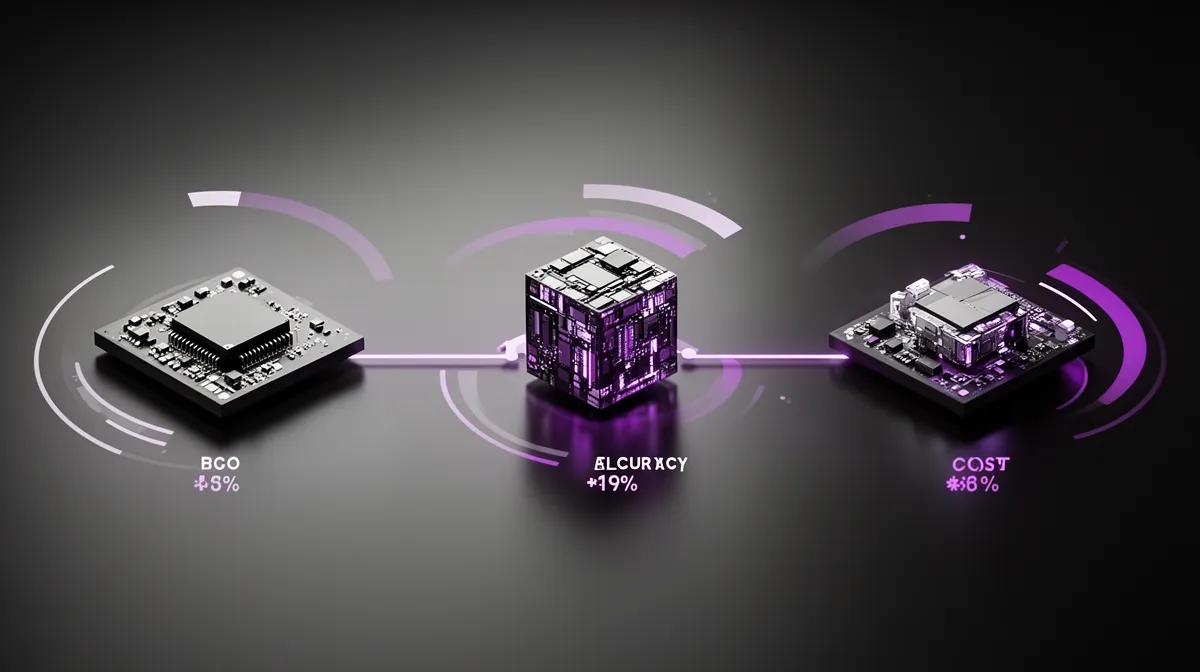
Consider two detectors. Model A is 2% more accurate on a standard benchmark but 3x slower, saturates the GPU, and triples your cloud bill. Model B is slightly "worse" on accuracy but easily hits real-time inference needs, leaves headroom on the device, and is far cheaper to run. For a production system, Model B is usually the winner, especially when you add model optimization and inference optimization techniques like quantization or pruning.
Engineering for Edge Deployment: The Real Differentiator
Once you move beyond the data center, the world looks very different. Computer vision development services for edge deployment have to care about heat, dust, network drops, and power budgets as much as they care about F1 scores. The vendors who treat edge as an afterthought are the ones whose systems quietly fail six months in.

Designing for Constrained, Messy Edge Environments
Edge environments are constrained by design. You may have a small industrial PC with a modest GPU, an ARM-based box with an accelerator, or even microcontrollers with co-processors. Connectivity can be intermittent; bandwidth is limited; devices live in cabinets next to vibrating machinery or out on poles in heat and rain. This is the real world edge AI solutions have to inhabit.
Design strategies revolve around tradeoffs between on-device processing and cloud offload. If your SLAs can tolerate higher latency and you have reliable bandwidth, you can push more computation to the cloud. If you need consistent low latency or operate with spotty connectivity, you move more inference to the edge and design buffering, fallbacks, and degraded modes.
An example: a fleet of inspection cameras on a factory line. Each device runs a local model to make pass/fail decisions in under 100 ms. Periodically, the system batches and uploads representative frames to the cloud for deeper analysis, retraining, and supervision. This hybrid pattern balances edge deployment efficiency with a robust cloud to edge migration path for improved models and analytics. It’s the kind of pattern you see in mature edge computer vision stacks.
The Technical Stack Behind Reliable Edge CV
Under the hood, a reliable edge CV stack includes several layers. Hardware selection comes first: CPUs vs GPUs vs TPUs or NPUs, and how much hardware acceleration you can afford at each site. Then come containerization and deployment orchestrators (Docker, K8s variants, or lighter agents), streaming protocols (RTSP, WebRTC, gRPC, MQTT), and storage strategies for buffering video and metadata.
On the model side, model compression and quantization are often non-negotiable. INT8 quantization, pruning, knowledge distillation, and operator fusion help you fit viable models onto constrained devices while preserving enough accuracy to meet your KPIs. This is crucial for real-time edge applications where a naive floating-point model simply won’t fit.
Deployment patterns range from fully on-premise deployment (for regulated or air-gapped environments) to hybrid cloud-edge setups where orchestration and monitoring live in the cloud while inference runs on-site. The stack you choose should match governance requirements and operational realities—not the other way around.
If you want to go deeper into these engineering details, there are strong industry write-ups on deploying models to platforms like NVIDIA Jetson or Google Coral that walk through runtimes, containerization, and update mechanics end-to-end.
MLOps for Vision at the Edge
A mature MLOps for vision pipeline at the edge looks different from generic ML MLOps. You’re not just updating a model in a single cloud endpoint; you’re managing a fleet of heterogeneous devices, each with its own configuration, logs, and health profile. That requires different tooling and discipline.
The key components include CI/CD for models and configurations, versioned deployments to device groups, A/B testing, monitoring, and rollback strategies. You monitor metrics like per-device latency, frame drop rates, error distributions by scenario, drift indicators across sites, and resource utilization. You also track non-ML metrics like camera uptime and storage utilization.
Over-the-air updates, canary releases, and safe rollbacks are proof of real edge maturity. For example, you might roll out a new model version to 5% of cameras, monitor for regressions in latency and accuracy, and automatically roll back if thresholds are breached. Platforms like Google Cloud and AWS have published MLOps best practices that, when adapted to video and edge, form the backbone of robust model lifecycle management.
This is also where reference architectures for designing production-grade AI solutions that survive real use become crucial. The patterns are similar across modalities; edge CV just adds more moving hardware pieces.
Human-in-the-Loop and Operational Playbooks
Finally, there’s the human layer. Any serious enterprise deployment needs clear operational workflows: who responds to which alerts, what tools they use, and how they record feedback. In other words, you need playbooks, not just a model server.
In a well-designed computer vision integration, operators see a small, prioritized queue of flagged frames or short clips. They can approve or reject detections, annotate issues, and trigger follow-up actions. Those feedback signals flow back into labeling queues and retraining pipelines, making the system smarter over time.
You also need incident response guidance: what happens when cameras go offline, models degrade, or edge devices fail. Who’s on call? What’s the escalation path? For safety-critical or regulated domains, these playbooks are non-negotiable. They’re also a core part of what we mean by enterprise computer vision application design services—you’re designing an operational system, not just a model.
How to Evaluate Computer Vision Development Partners in 2025
With this context, how do you choose the right partner? The question in 2025 isn’t just who can build a model—it’s how to choose a computer vision development partner that can ship and sustain production systems. The best computer vision development services for production deployment are multidisciplinary, methodical, and edge-literate.
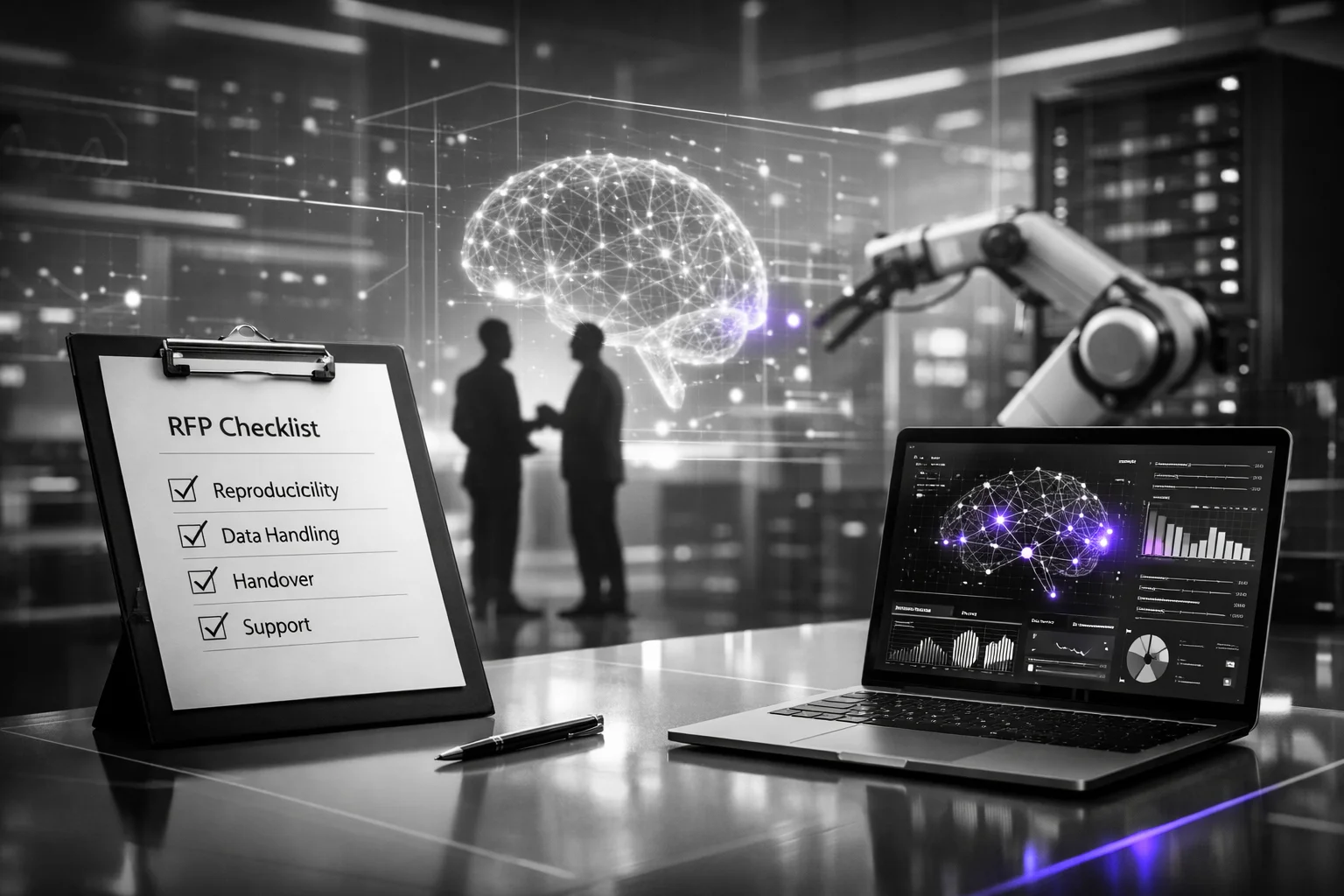
Capability Checklist: Beyond the Data Science Team
Start with capabilities. A credible partner for enterprise vision needs more than a strong data science bench. At minimum, you want product and UX expertise for CV, edge engineering, DevOps/MLOps, data engineering, and relevant domain knowledge.
In practical terms, ask to see the org chart. Look for roles like "Computer Vision Product Manager," "Edge Platform Engineer," "MLOps Engineer," and "Data Engineer" alongside ML researchers. If every story leads back to a single superstar ML expert and generic software engineers, that’s a warning sign for complex computer vision integration work.
This is also where enterprise computer vision application design services are visible. If there’s no one owning workflows, UX, field operations, and success metrics, the risk is that you get a beautifully trained model with nowhere to live inside your business.
Questions to Ask About Methodology and Edge Deployment
Next, dig into methodology. Since you’re buying computer vision development services for edge deployment, ask concrete questions about how they operate.
Examples:
- How do you decide between off-the-shelf, fine-tuned, and custom models?
- How do you benchmark models on target edge hardware?
- What’s your process for OTA updates and rollbacks on devices?
- How do you design a pilot to production rollout plan?
Listen for specifics. A red-flag answer to model selection might be, "We usually train custom models from scratch for our clients" without clear criteria. A green-flag answer references concrete computer vision consulting services for model selection, comparative experiments across multiple architectures, and explicit latency and cost tradeoffs on sample devices.
Similarly, if you ask about OTA updates and hear "We’ll figure that out with your IT team later," that’s a problem. A mature partner can describe device groups, staged rollouts, monitoring metrics, and failure playbooks in detail.
Evaluating Total Cost of Ownership, Not Just Build Cost
Too many buyers focus on build cost and ignore TCO for a production CV system. But the real spend lives in hardware, runtime, data labeling, monitoring, on-call operations, and retraining over years. Architecture decisions at day one compound into large cost differences by year three.
When evaluating proposals, ask vendors to model a three-year TCO. Include hardware at each site, cloud or edge runtime costs, labeling and annotation, monitoring and observability tooling, and expected iteration cycles. Make sure they account for both heavy cloud inference and optimized edge inference patterns so you can compare.
For instance, you might compare a design that sends all video to the cloud for inference versus one that runs optimized models on-site and uploads only events and selected frames. The latter may require more upfront work in real-time edge applications engineering but can drastically reduce ongoing spend and improve reliability. Reports analyzing cloud vs edge inference costs reinforce how architectural choices shape long-term computer vision ROI.
Red Flags in Computer Vision Proposals
Finally, watch for red flags that map directly to why most computer vision development services fail in production.
Common signs include: vague or missing edge deployment plans; generic slides on "MLOps" that don’t mention camera health, device groups, or OTA; heavy emphasis on custom R&D without clear business justification; and decks full of architecture diagrams but no discussion of workflows, incident response, or success metrics.
If a vendor can’t describe at least one serious failure they’ve handled and what they changed in response, that’s another warning. The best computer vision development partners are battle-tested and transparent about lessons learned. When in doubt, remember: the best computer vision development services for production deployment talk as much about operations and edge as they do about models.
How Buzzi.ai Delivers Application-First, Edge-Ready Computer Vision
Everything we’ve described so far is how we approach vision at Buzzi.ai. We position ourselves as an application-first computer vision development company, not a model boutique. Our focus is on building systems that survive contact with reality and create compounding value over time.
Design-Led Methodology From Day One
Every engagement starts with discovery, not code. We run AI discovery and strategy workshops to map workflows, stakeholders, and constraints. We define KPIs, SLAs, and operational boundaries before committing to a specific architecture.
From there, we create a blueprint that treats models as interchangeable components inside a larger product and operations system. That blueprint covers user journeys, exception handling, feedback loops, and monitoring. It aligns business leaders, operations teams, and technical stakeholders early, which reduces risk later.
This design-led approach draws on our broader experience beyond computer vision: we’ve helped clients design and ship automation, assistants, and analytics that continue to evolve. The patterns for durable AI systems—clear workflows, observability, iteration loops—are the same.
Model-Agnostic, Benchmark-Driven Selection
We take a model-agnostic stance. Our computer vision consulting services for model selection always start with a landscape scan of relevant off-the-shelf and fine-tunable models. We evaluate them on your real-world data and your constraints, not just abstract benchmarks.
That means comparing multiple candidates on target or representative edge hardware, measuring benchmarking and evaluation metrics like latency, robustness across environments, and inference cost per event. We optimize for a portfolio of metrics, not just accuracy, and we make the tradeoffs transparent to you.
When custom models are justified, we build them—but only when they clearly improve model optimization under your constraints or unlock critical capabilities. Our goal is to keep you flexible and avoid unnecessary lock-in, so we lean on standard frameworks and tooling wherever possible.
Edge Deployment, Monitoring, and Iteration as Core Competencies
Edge engineering is a first-class capability at Buzzi.ai. We’ve worked with varied chipsets, streaming setups, and deployment environments, from on-prem industrial PCs to low-power devices. For us, edge deployment isn’t an afterthought; it’s where much of the value is created.
We design MLOps pipelines tuned for vision and edge: device groups, OTA updates, canary releases, and integrated monitoring across model performance and hardware health. This is the same discipline we bring to production-ready computer vision in other domains: what matters is not the first deployment, but the hundredth update.
On top of that, we engineer human-in-the-loop workflows and retraining cycles that reflect how your operations team actually works. This is where our enterprise computer vision application design services come full circle: combining product, ML, and edge to deliver systems that keep improving instead of decaying.
Conclusion: The Real Test of Computer Vision Services
When you strip away the hype, the real differentiator in computer vision development services is not a proprietary model—it’s application-first design plus robust edge engineering. Models matter, but they’re a small slice of what makes production-ready computer vision succeed. The rest is workflows, constraints, MLOps, and the messy reality of devices in the field.
Modern CV projects are roughly 80% product, integration, and MLOps work, and 20% model R&D. That’s why the best computer vision development services for production deployment are multidisciplinary, transparent about tradeoffs, and explicit about their edge strategy. Evaluating vendors through that lens—capabilities, methodology, TCO thinking—will save you from the familiar PoC-to-production trap.
If you’re planning or rescuing a CV initiative, use the checklists and questions in this article to audit your current path. Then, when you’re ready to design an application-first, edge-ready roadmap, we’re here to help through our AI discovery and consulting engagements. The goal isn’t just a great demo; it’s a system that keeps working when theory collides with reality.
FAQ
Why do so many computer vision development services fail when moving from PoC to production?
Most failures come from treating the model as the product and ignoring the system around it. PoCs are usually trained on curated data, run on powerful hardware, and tested under ideal conditions that don’t match messy field environments. Without clear workflows, edge-aware engineering, monitoring, and retraining plans, the same stack that worked in a demo often collapses under real-world constraints.
What does an application-first computer vision development process actually look like?
An application-first process starts with user journeys, decisions, and KPIs—not architectures or networks. Teams map workflows, define SLAs, and translate business constraints into technical requirements like latency and throughput. Only then do they choose models, design edge deployment patterns, and build human-in-the-loop feedback loops to keep improving performance over time.
How should I decide between off-the-shelf, fine-tuned, and custom computer vision models?
Start by clarifying your constraints: how unique your data is, what latency and device limits you have, and how often the system must update. For many use cases, off-the-shelf or lightly fine-tuned models are enough and much cheaper to operate. Reserve custom models for truly novel modalities, safety-critical tasks with narrow tolerances, or scenarios where generic backbones demonstrably cannot meet your KPIs.
What technical capabilities are critical for reliable computer vision edge deployment?
You need expertise in hardware selection and on-device processing, containerization and orchestration, streaming protocols, and model compression or quantization. Just as crucial are MLOps capabilities tailored to fleets of devices: OTA updates, canary rollouts, monitoring across both model and hardware metrics, and safe rollback procedures. Partners should be able to describe specific stacks they’ve deployed on real edge platforms, not just high-level diagrams.
How do latency, throughput, and hardware constraints influence CV architecture decisions?
Latency and throughput targets determine how much computation can live at the edge versus the cloud, and what kind of accelerators you need. Strict SLAs often force you toward compact models, aggressive optimization, and local inference on devices sized to your frame rates. Under looser constraints or strong connectivity, you can centralize more work—but architecture should always follow clearly quantified performance and hardware limits.
What metrics should I monitor to evaluate computer vision performance in the real world?
You should track both ML metrics and system metrics. On the ML side, monitor detection quality by scenario, false positive/negative rates, and drift indicators across sites or time. On the system side, watch per-device latency, frame drop rates, camera uptime, resource utilization, and the rate and nature of human overrides—these reveal operational health and where retraining or redesign is needed.
How can I estimate the total cost of ownership for a production computer vision system?
TCO includes far more than initial build cost: hardware at each site, cloud or edge runtime, data storage and egress, labeling and annotation, monitoring platforms, on-call operations, and ongoing model retraining and feature work. Ask vendors to model at least a three-year horizon under realistic usage assumptions, comparing architectures (e.g., heavy cloud inference vs optimized edge inference). This analysis often reveals that slightly higher upfront engineering can dramatically lower lifetime costs.
What questions should I ask a potential computer vision development partner before signing a contract?
Ask how they choose between off-the-shelf, fine-tuned, and custom models; how they benchmark on your target hardware; and how they design PoC-to-production rollouts. Probe their MLOps and edge deployment process: OTA updates, monitoring metrics, incident response, and rollback strategies. Finally, request examples of failures they’ve handled and what they changed as a result—this is where real operational maturity shows up.
How does an MLOps pipeline for computer vision differ from generic ML MLOps?
Vision systems add continuous, high-volume streaming data and fleets of heterogeneous devices to the mix. MLOps for CV has to manage camera health, frame sampling, and synchronization, plus device-specific deployments and logging. It also demands tooling for visual debugging and edge-case triage, making observability and human-in-the-loop review even more central than in many tabular or NLP applications.
How is Buzzi.ai’s application-first approach to computer vision different from model-centric vendors?
We begin with workflows, constraints, and KPIs, then design systems where models are interchangeable components rather than the hero. Our methodology spans AI product design, edge engineering, and dedicated AI discovery and strategy workshops so your initiative is grounded in business value. We’re model-agnostic, benchmark-driven on your data and devices, and focused on building vision systems that keep working—and improving—long after the first deployment.