AI Voice Bot for Call Centers: Win CSAT by Routing on Urgency
Deploy an ai voice bot for call center calls by intent urgency—not call type—to boost containment, protect CSAT, and prove ROI. See the playbook.
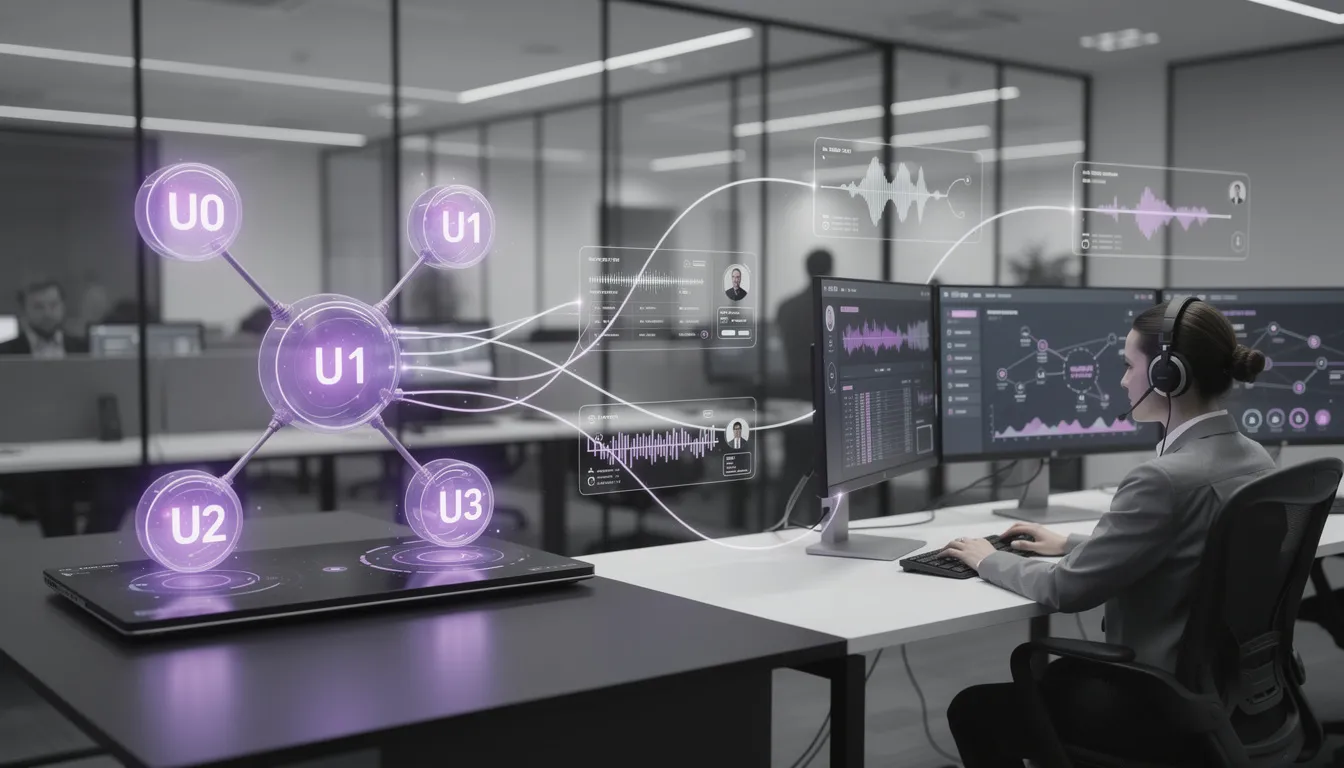
What if the reason your AI voice bot for call center calls underperformed isn’t the model—but the calls you gave it? Most teams automate by call type (billing/support) when they should automate by urgency. That sounds like semantics until you watch a “billing” caller whose card was charged twice today get stuck in the same flow as someone who just wants a PDF invoice copy.
This is the common failure mode: you deploy a call center voicebot into the highest-stakes moments, customers feel trapped, and CSAT dips even if your ASR and intent detection look “good” in a demo. Then leadership concludes “voice bots don’t work,” when the real problem was the deployment decision: which moments you chose to automate.
Our thesis is simple: deploy an ai voice bot for call center operations by caller intent urgency, not by department-style buckets. When you route by urgency, low-stakes requests get fast self-service, and high-stakes requests get fast humans (with the bot assisting in the background). Containment rises where it’s safe, and your ROI story gets cleaner because you can prove you protected the calls that matter.
In this playbook, we’ll walk through a practical framework (U0–U3), how to score urgency from historical call data, routing rules for bot-first vs hybrid vs human-first, what real-time urgency detection can do today, and the KPIs that keep you honest. We’ll also show an implementation roadmap you can run in 10 weeks.
At Buzzi.ai, we build tailor-made AI voice agents and design hybrid bot–human call flows (including WhatsApp voice bots in emerging markets). That means this isn’t theory; it’s the set of choices that tends to separate “successful pilot” from “quiet rollback.”
Why call-type automation fails (and what it breaks)
Call centers love neat categories because reporting loves neat categories. Billing. Support. Orders. Cancellations. It’s how you staff, how you forecast, and how you explain the business to the CFO.
But “call type” is not how customers experience a problem. Customers experience a moment: time pressure, emotional load, and the fear that if they say the wrong thing, the outcome gets worse. When you automate the label instead of the moment, you get the worst of both worlds: low containment and damaged trust.
Call type is a reporting label, not a customer moment
Inside a single bucket, the stakes can vary by orders of magnitude. A “billing” call might be a harmless request or a crisis, and routing both through the same automation flow is a hidden bet against your CSAT.
Here are the kinds of contrasts that make call-type automation brittle:
- Billing: “Send me my invoice copy” (non-urgent inquiry) vs “You charged me twice and my rent is due today” (urgent support call).
- Support: “How do I change my password?” (routine) vs “My account is locked and I have a deadline in 30 minutes” (time-sensitive).
- Orders: “What’s my tracking link?” (informational) vs “My delivery was supposed to arrive today and it’s for a medical device” (high impact).
If your call classification model treats those as equivalent because they share a department label, you’ll optimize the wrong thing. Intent-based routing works when the “intent” includes urgency and stakes, not just topic.
The three failure patterns: misrouting, zero-outs, and trust erosion
When high-urgency callers hit automation first, three predictable patterns show up in your call center KPIs.
- Misrouting: The caller barges in with “agent” or “representative,” loops, and escalates angry. Even a correct intent detection can still be a wrong outcome if the bot insists on self-service for a U3 moment.
- Zero-outs and abandonments: Callers hang up, redial, or switch channels. This doesn’t just hurt customer experience optimization; it creates queue volatility that makes service level agreements harder to hit.
- Trust erosion: Customers conclude you’re “hiding humans.” That belief tends to persist across future contacts, which quietly increases escalation to human agent and reduces self-service adoption.
A typical scenario looks like this: a customer’s service is about to be suspended, they call in, your voice bot asks three identity questions and offers a menu, the customer says “I need help now,” the bot responds with a generic troubleshooting path, and the customer starts repeating “agent!” louder. By the time they reach a person, they’re already primed to rate you poorly, regardless of the resolution.
Why better ASR/NLU doesn’t fix a bad deployment decision
Teams often respond by upgrading components: better ASR, better NLU, better conversation design. Those help, but they don’t fix the core mismatch between caller urgency and the automation contract you implicitly offered.
The deployment unit isn’t the model; it’s the call triage + escalation policy + handoff experience. If you haven’t defined what the bot should never handle, accuracy improvements can still coincide with falling CSAT because you’re still putting urgent calls in front of a machine that shouldn’t be the gatekeeper.
For a useful outside view on contact center AI tradeoffs, see Gartner’s ongoing research on customer service and conversational AI (for example: Gartner Customer Service & Support).
The urgency-first framework for an AI voice bot for call center ops
An urgency-first approach starts with a premise that sounds obvious, but is surprisingly rare in deployments: containment should be highest where urgency is lowest. That’s how you scale a call center voicebot without gambling your brand on edge cases.
We recommend a simple system: define urgency operationally, group intents into four urgency bands (U0–U3), and attach the right handling model to each band. Once that’s in place, your call routing strategy gets dramatically easier to defend to leadership and to frontline teams.
Define ‘urgency’ in operational terms (not feelings)
Urgency isn’t “the customer is upset.” It’s a measurable combination of (1) time-sensitivity and (2) impact if wrong.
- Time-sensitivity: How soon must this be resolved before it causes harm? (Minutes, hours, today, this week.)
- Impact/severity: What’s the cost/risk if the wrong action happens? (Money, safety, compliance, churn, reputational damage.)
Those two axes map cleanly onto your existing SLAs, policies, and operational thresholds: refund windows, outage severity, fraud rules, delivery ETA breaches, and customer tier.
A practical rubric you can use with operations teams is:
- U0 (informational): No deadline, low impact. “What are your hours?” “Send invoice copy.”
- U1 (routine but personal): Low risk but needs account context. “Change address.” “Reset password.”
- U2 (time-sensitive): Deadline pressure or meaningful business impact. “Delivery missed.” “Account locked before travel.”
- U3 (high-stakes): Safety, fraud, legal, severe outage, imminent cancellation. “Unauthorized transaction.” “Medical equipment not delivered.”
Create 4 urgency bands and attach the right handling model
The handling model is where urgency becomes action. Here’s the simplest mapping that works across industries:
- U0: bot-first self-service. Resolve quickly, confirm, and optionally follow up via SMS/email with a receipt. Example: “Tracking link,” “Store hours,” “Invoice copy.”
- U1: bot-first with easy handoff. Let the bot do the work (authentication, data capture, standard actions) but make escalation frictionless. Example: “Update contact details,” “Cancel subscription at end of term,” “Change plan.”
- U2: hybrid bot–human model. Use the bot for triage and context gathering, then do an immediate warm transfer. Example: “Delivery missed,” “Service outage in my area,” “Charged twice.”
- U3: human-first. The bot should assist agents (summary, next-best-action, checklists), not block the caller. Example: fraud/chargeback, safety issues, regulated complaints.
Notice what’s missing: “billing calls go to the bot.” Instead, some billing intents land in U0/U1; others are U2/U3 and should be treated accordingly.
A containment strategy that doesn’t gamble with CSAT
Voicebot containment rate is a good metric when it’s aligned with the right calls. When it isn’t, it becomes a vanity metric that rewards the bot for “handling” calls customers will repeat anyway.
High containment on U0/U1 is a feature. High containment on U2/U3 is a risk unless you can prove “resolved without regret.”
The operational goal is “resolved without regret”: the caller got what they needed, didn’t have to call back, and didn’t feel like they fought the system. The “escape hatch” is part of that experience, not a failure path: fast escalation, no dead ends, and a clear promise about what happens next.

How to find urgency from your historical call data
Urgency-first routing sounds like it requires perfect real-time intelligence. It doesn’t. In practice, your historical calls already contain the patterns you need—you just need to label them in a way that connects intent to outcome.
Start with transcripts + outcomes, not a blank taxonomy
Start with the data you already have: call recordings/transcripts (or QA summaries) and the downstream outcomes in your CRM/ticketing system. You’re not trying to invent the perfect ontology; you’re trying to identify where automation is safe and where it’s dangerous.
A “week 1” inventory checklist that works:
- Export the top 20–40 contact reasons by volume.
- For each reason, pull a sample of calls with transcripts/recordings (200–500 total is enough to start).
- Join to outcomes: refund issued, cancellation, complaint, escalation, repeat call within 48 hours, SLA breach, chargeback, incident created.
- Tag obvious urgency signals in the language: “today,” “right now,” “charged twice,” “account locked,” “delivery missed.”
A simple labeling template (in plain text/spreadsheet form) is usually sufficient: primary intent, urgency band (U0–U3), reason for urgency, resolution outcome, escalation needed?, repeat contact?.
If you’re running on a voice platform that supports recording + transcription pipelines, Twilio’s docs are a good reference point for the building blocks (routing, recordings, and analysis): Twilio Programmable Voice documentation.

Build an urgency scoring model you can explain to leadership
Start with an interpretable baseline. Rule-based urgency scoring isn’t “less advanced”; it’s more governable in early phases. Leadership and compliance teams need to understand why a call was routed the way it was.
Common features that improve urgency scoring without overcomplicating it:
- Lexical signals: time words (“today”), severity words (“fraud,” “outage”), financial terms (“charged,” “refund”), access blockers (“locked out”).
- Account context: customer tier, payment status, open ticket severity, outage flags, delivery ETA breach, renewal date.
- Contact history: number of contacts in last 7 days, unresolved cases, prior escalations.
- SLA timers: time-to-deadline (e.g., travel date, cutoff time, appointment window).
Think probabilistically: the model outputs a score with thresholds. Example: “late delivery” + “high-value customer” + “2 prior contacts” might push you into U2, triggering queue prioritization and a warm transfer instead of self-service.
Validate with agent QA and CX reviews (the ‘reality check’)
Agents know which calls explode. QA knows which calls create compliance risk. CX leaders know which failures cause churn. Treat urgency scoring as a product: validate it with the people who live with it.
This is also where you build a living “do-not-automate” list. It should shrink slowly—only by proof. One common edge case: “charge dispute” might look like U1 when phrased calmly, but QA may flag it as U3 in regulated contexts because the wrong action can trigger legal or financial risk.
Design routing rules: bot-first, hybrid, and human-first paths
Once you have urgency bands, routing becomes a design problem rather than an argument. You’re no longer debating whether to automate “billing”; you’re defining how the system behaves when it believes a caller is U2 with 70% confidence.
This is where an ai voice bot for call center deployment strategy either earns trust or loses it. The difference usually comes down to the first 20 seconds, the quality of hybrid handoffs, and whether escalation feels like an SLA—not a loophole.
The ‘two-turn triage’ pattern at call start
The goal is to identify intent + urgency in under 20 seconds. The best-performing pattern is “two turns”: one question for intent, one for urgency constraint.
Example openings (adjust to your domain, but keep the structure):
- Ecommerce: “How can I help today—an order, a return, or something else?” then “Is this about something that needs to be fixed today?”
- Telecom: “Are you calling about an outage, your plan, or a bill?” then “Are you without service right now?”
- Financial services: “Is this about a card payment, an account login, or another issue?” then “Do you suspect fraud or an unauthorized charge?”
Then confirm: “Got it—this sounds time-sensitive. I’ll get you to the fastest option.” That single sentence does more for customer experience optimization than most “friendly” scripts because it proves you understood the stakes.
For readers who want a platform view of routing and queues, Genesys is one of the canonical references: Genesys Cloud CX documentation.
Hybrid transfers that keep context (and protect handle time)
Hybrid is where ROI and CX can compound. You’re not forcing containment; you’re reducing agent load by pre-collecting context and eliminating repetition.
A good warm-transfer payload is structured, not a paragraph. Typical fields that should appear on the agent desktop:
- Intent: “Delivery missed”
- Urgency band + score: “U2 (0.78)”
- Summary: “Customer reports package due today not received; tracking shows ‘delayed’.”
- Steps attempted: “Tracking lookup completed; offered reschedule; customer declined.”
- Authentication status: verified / not verified + method used
- Relevant context: customer tier, open tickets, SLA timer, outage flag
This is also where AI agent development for hybrid bot–human workflows matters: you’re building a system that shares state across bot and agent, not just a voice interface. If you’re exploring that architecture, we cover it on our AI agent development for hybrid bot–human workflows page.
Design escalation like a product SLA
Escalation shouldn’t feel like the caller “found the cheat code.” It should feel like a documented, reliable path—especially for U2/U3 calls.
Define explicit escalation triggers (and log them):
- Sentiment/risk: strong negative sentiment as a secondary signal (accelerate escalation).
- Misunderstanding: two failed intent matches or repeated corrections.
- Barge-in pattern: repeated “agent/representative.”
- Silence/hesitation: long silence after question (possible confusion).
- Keyword triggers: “fraud,” “police,” “ambulance,” “lawyer,” “outage,” “charged twice.”
A simple policy table by band helps:
- U0: allow bot to complete; escalation available but not emphasized.
- U1: bot-first; escalate on request or 2 misunderstandings.
- U2: maximum bot time before transfer (e.g., <45 seconds); always offer transfer option.
- U3: human-first; bot stays in agent-assist mode.

Real-time urgency detection: what’s feasible today
Real-time urgency detection is less about “can we read emotions” and more about “can we make a safe decision quickly.” The good news: you can do a lot in the first 10 seconds using simple, auditable signals.
Signals you can use in the first 10 seconds
In practice, the highest-value signals cluster into three buckets:
- Lexical: time words (“today,” “now”), severity words (“fraud,” “outage”), blockers (“can’t access,” “locked out”).
- Account/context: outage status, open incident severity, delivery ETA breach, failed payment flag, customer tier.
- Behavioral: barge-in frequency, repeated “representative,” long silence after prompts.
Examples of phrase-to-action mappings:
- “I was charged twice” → route to U2 hybrid; bot verifies details, then warm transfer.
- “I think this is fraud” → route to U3 human-first; bot may only confirm identity and connect.
- “My internet is down right now” + outage flag true → U2 hybrid with queue prioritization.
Tone and emotion: useful, but don’t overfit
Acoustic emotion signals can help as a secondary input—especially to accelerate escalation—but they’re risky as a gate. The failure mode is obvious: a calm caller with an urgent fraud issue gets misclassified as “not urgent,” or a loud caller about a non-urgent question gets prioritized unfairly.
The safer pattern is: use tone/emotion only to increase the probability of escalation, not to block service. And log routing decisions for auditability and continuous improvement.
For governance and responsible routing, the NIST AI Risk Management Framework (AI RMF) is a solid, practical reference.
Start simple: rules first, ML second, continuous tuning always
A maturity model we see work:
- Phase 1 (2–4 weeks): deterministic rules + known high-stakes flags; launch U0/U1 bot-first flows with strong escalation.
- Phase 2 (6–10 weeks): supervised model trained on labeled calls to predict urgency band; tighten thresholds by measuring CSAT by band.
- Phase 3 (ongoing): closed-loop optimization with A/B thresholds, incident playbooks, and regular reviews.
This is the practical answer to “what is the best way to deploy ai voice bots in call centers”: sequence capability behind guardrails, and let evidence—not ambition—expand the surface area.
KPIs that prove urgency-based deployment works (without vanity metrics)
The biggest mistake in measurement is reporting a single containment number. It’s like reporting “conversion rate” for an entire e-commerce site without separating new vs returning users.
Urgency-first deployment gives you a better lens: measure outcomes by urgency band. That’s how you prove you built a call center voice bot solution for high containment rate where it’s appropriate, while protecting high-stakes experiences.

Measure outcomes by urgency band (the metric most teams miss)
At minimum, build a simple table (by U0/U1/U2/U3) that tracks:
- Voicebot containment rate by band (expect it to be highest in U0 and drop steeply by U2/U3).
- CSAT improvement (or CSAT delta) by band and by handling model (bot-first vs hybrid vs human-first).
- First contact resolution by band.
- Repeat-contact rate within 24–48 hours for the same issue (the hidden failure detector).
Why this matters: a bot can “contain” a call by ending it, but only outcomes prove it actually solved the customer’s problem.
Operational metrics: AHT, queue health, and SLA adherence
Urgency-based routing should improve agent efficiency without increasing stress. If U0/U1 volume is contained, agents get fewer low-value calls, and hybrid handoffs make the remaining calls faster to resolve.
Watch these operational metrics:
- AHT: should drop for agents if context passes cleanly on escalation.
- Queue volatility: fewer spikes when low-urgency noise is absorbed by bots.
- Service level agreements: faster pickup for U2/U3 because you stopped forcing them through unnecessary steps.
For perspective on productivity impact in customer operations, McKinsey’s research is a helpful, mainstream reference: McKinsey Operations insights.
Risk metrics: escalation friction and ‘bot regret’
If you want to protect CSAT, you need to track where customers felt trapped.
- Escalation friction: time-to-agent after an escalation request (and how often escalation fails).
- Bot regret: calls that were contained by the bot but result in a repeat contact for the same issue within 24–48 hours.
- Compliance/QA fail rates: especially for any automated actions in regulated contexts.
Bot regret is straightforward to calculate: take calls marked “bot-resolved,” join to customer ID + reason code, and count repeat contacts within a window. If the bot “resolved” 10,000 U1 calls but 2,000 come back quickly, your containment story is false—and you’ll feel it in your staffing.
Implementation roadmap: from pilot to scale (and the people work)
Most teams underestimate how much of voice automation is people work. The model matters, but so do training, escalation policies, QA governance, and workforce management.
Below is a 10-week roadmap that fits how call centers actually operate. It’s also designed to produce early wins on low-priority calls while keeping your urgency-first guardrails intact—exactly what a practical ai voice bot routing strategy for urgent vs non urgent calls should do.
Weeks 0–2: discovery sprint and ‘do-not-automate’ guardrails
Start by aligning stakeholders: operations, IT, CX, compliance, QA, and workforce management. If those groups disagree on what “urgent” means, your bot will become the battleground.
Pick 3–5 pilot intents that are high volume, low emotional cost, and have clear resolution paths. Examples:
- Invoice copy / billing statement
- Order status / tracking link
- Password reset / account unlock (if safe)
- Store hours / branch location
- Basic plan information
Then define guardrails before you build: your escalation contract, logging requirements, and success metrics. This is where you write your initial “do-not-automate” list (fraud, safety, regulated disputes, anything that could cause irreversible harm).
Weeks 3–6: build, integrate, and design the hybrid handoff
Now you build the actual call flows and integrate what matters: CRM/ticketing context, order systems, outage status, authentication (if needed), and reason codes. This is also where conversation design stops being “script writing” and becomes operations design: confirmations, receipts, and what you do when the bot is uncertain.
Train agents on the new workflow. A practical training list includes:
- How to read the handoff payload (intent, urgency score, summary).
- How to avoid “tell me again” (use the bot context, then confirm succinctly).
- How to tag edge cases for QA review.
- How to handle escalations quickly without punishing the customer for escalating.
If you’re building or upgrading this capability, our AI voice assistant development for call centers service focuses specifically on the routing, escalation, and integration details that determine whether pilots survive contact with reality.
Weeks 7–10: A/B test thresholds, then expand coverage safely
At this stage you’re not proving the bot can “talk.” You’re proving that your urgency thresholds improve outcomes.
A simple A/B test design:
- Control: treat “delivery missed” as U1 (bot-first with optional handoff).
- Variant: treat “delivery missed” as U2 (hybrid with immediate warm transfer after triage).
Monitor CSAT by urgency band, escalation friction, repeat contacts, and SLA adherence. If the variant reduces repeat calls and improves CSAT, you’ve earned the right to expand. Expand horizontally across call types: keep urgency logic constant, swap domain content. That’s how a scalable ai voice bot for call center deployment strategy avoids reinvention every time you add a new department.
Finally, create a monthly optimization cadence: review top failures, add new intents, update routing rules/models, and refresh your do-not-automate list based on evidence.

Common pitfalls—and how urgency-first deployment avoids them
Even teams with strong tooling can fail if incentives and sequencing are wrong. Urgency-first routing doesn’t magically prevent mistakes, but it does constrain the blast radius.
Pitfall: chasing containment on the hardest calls first
The most common anti-pattern is trying to “prove AI” on complex, emotional calls. You pick cancellations, disputes, or outage complaints because they’re expensive. Then the bot fails in the most visible moments and the organization loses confidence.
Urgency-first flips the sequence: start with U0/U1 where customers forgive imperfection and where success is easy to measure. Build trust, improve the call classification model, then expand into hybrid U2 flows. This is the path to becoming the best ai voice bot for call center customer service in practice—not in a slide deck.
Pitfall: treating escalation as a failure instead of a feature
Escalation is the safety valve that protects CSAT for U2/U3. If you punish escalation (long holds, lost context, “tell me again”), customers learn to hate the bot even when it’s helpful.
Instrument escalation reason codes and treat them as product feedback. Examples: “misunderstood intent,” “policy exception needed,” “customer requested agent,” “authentication failed,” “compliance trigger.” Over time, these codes are how you decide which intents should become bot-capable and which should remain human-first.
Pitfall: ‘set-and-forget’ routing rules
Urgency patterns change. Outages happen. Promos spike demand. Policies update. Seasonality distorts the distribution of calls, and your routing rules can get stale in weeks.
Run governance: monthly reviews, incident playbooks for rapid rule updates, and a “human in the loop” process for new intents. A holiday delivery surge is a classic example: what was U1 (“where’s my package?”) becomes U2 (“it must arrive before an event”), and your routing needs to reflect that shift.
Conclusion
Deploying a voice bot by call type is convenient—but it’s also how teams accidentally misroute high-stakes customer moments and harm CSAT. An urgency-first framework is a simple, defensible alternative: U0–U3 bands that tell you what to automate, what to triage, and what should be human-first.
When you measure containment and CSAT by urgency band, you stop arguing about vanity metrics and start proving real outcomes. And when you design hybrid handoffs that preserve context, escalation becomes a CX advantage rather than a failure path.
If you’re evaluating a ai voice bot for call center teams—or recovering from a frustrating rollout—talk to Buzzi.ai about an urgency-first deployment sprint. We’ll map your top intents, define guardrails, and design a hybrid call flow that improves containment without sacrificing CSAT. Learn more about our approach to AI voice assistant development for call centers.
FAQ
What is an AI voice bot for call centers vs a traditional IVR?
A traditional IVR is primarily menu-driven: “Press 1 for billing.” An AI voice bot for call centers uses speech understanding to handle natural language (“I need my invoice copy”) and can complete tasks end-to-end.
The bigger difference is adaptability. A voicebot can use context (account status, open tickets, delivery ETAs) and route dynamically, while IVRs tend to force customers into rigid trees. Done well, this reduces friction and improves first contact resolution.
Why is deploying a voice bot by call type (billing/support) a common mistake?
Call type is a reporting label, not a customer moment. Within “billing,” you’ll find both low-urgency requests (invoice copy) and high-urgency crises (charged twice, cutoff today).
When you automate by bucket, you misroute urgent calls into bot-first flows and create “agent! agent!” behavior, abandonments, and repeat contacts. Urgency-first routing prevents this by aligning automation with stakes and time pressure.
How do you define and score caller intent urgency in a way operations teams trust?
Make urgency operational: time-sensitivity × impact/severity. Then anchor it to things ops already respects—SLAs, policy thresholds, outage severity, fraud rules, and delivery breaches.
Start with interpretable rules (keywords + account flags), validate with agent QA, and only then add ML scoring. Treat urgency as a probability with thresholds, so you can tune routing safely without pretending you’re always “certain.”
Which intents are best for bot-first automation, and which should be human-first?
Bot-first is ideal for U0/U1 intents: informational and routine requests with clear resolution paths and low downside if the bot is imperfect—order status, invoice copies, store hours, basic plan info.
Human-first is appropriate for U3: fraud, safety issues, severe complaints, regulated disputes, and anything where a wrong step causes irreversible harm. U2 sits in the middle and is often best served by a hybrid bot–human model.
How do you design a hybrid bot-to-agent handoff that keeps context?
A hybrid handoff should be a structured payload, not a narrative: intent, urgency score, customer summary, steps attempted, and authentication status. The agent should be able to start with “I see what happened” instead of “Tell me again.”
This protects handle time and trust simultaneously. If you’re implementing this, Buzzi.ai’s AI agent development for hybrid bot–human workflows focuses on exactly these context-sharing integrations.
What KPIs prove an urgency-based voice bot rollout is working (by urgency band)?
Track containment, CSAT, and repeat-contact rate by U0/U1/U2/U3—because a single top-line containment number can hide real damage. You want high voicebot containment rate in U0/U1 and intentional escalation in U2/U3.
Add “bot regret” (repeat contact within 24–48 hours after bot containment) and escalation friction (time-to-agent after escalation request). These two metrics tell you whether the bot is genuinely resolving issues or just ending calls.
How can you detect urgency in real time at the start of a call without annoying customers?
Use a two-turn triage: one question to identify intent, one question to confirm urgency (deadline/impact). Done well, this takes under 20 seconds and feels faster than a menu because it’s conversational.
Supplement with safe signals: keyword triggers (“fraud,” “charged twice”), account context (outage flag, delivery breach), and behavioral cues (repeated “representative”). Then route to bot-first, hybrid, or human-first paths with a clear promise about what happens next.
How do you A/B test urgency thresholds and routing rules safely in production?
Test one threshold at a time (for example, whether “delivery missed” is treated as U1 vs U2). Keep guardrails constant: always allow escalation, cap bot time for U2+, and log reason codes.
Measure CSAT and repeat-contact rate by urgency band, not just overall. If a change increases containment but increases bot regret, it’s not an improvement—it’s deferred cost that will hit your queues later.
What change management and agent training are required for urgency-first routing?
Agents need to trust that the bot is making their day easier, not stealing their job or dumping angry callers on them. Train them on the handoff payload, escalation policy, and how to close the loop without forcing customers to repeat information.
Operationally, you also need a monthly governance cadence with QA and workforce management: review top escalations, update rules during outages/promos, and maintain a living do-not-automate list.
How can Buzzi.ai help design and deploy an urgency-based call center voice bot?
We help you turn urgency into a deployable system: define U0–U3 bands, map top intents, build routing rules, and design hybrid transfers that preserve context. That includes data labeling sprints, integration with CRM/ticketing, and instrumentation for KPIs like bot regret and escalation friction.
If you want a low-risk path to ROI, we recommend an urgency-first pilot that starts with U0/U1 intents and expands into hybrid U2 only after the metrics prove it’s safe.