AI Technology Consulting Isn’t Magic—It’s Translation That Delivers
AI technology consulting should translate messy business goals into implementable AI plans. Learn how to evaluate consultants and avoid slideware. Talk to Buzzi.ai

Most AI consulting fails for a mundane reason: nobody translates the business problem into a buildable specification, so teams build the wrong thing flawlessly.
That’s why ai technology consulting is less about “AI brilliance” and more about translation: turning executive intent into operator reality and then into engineering constraints. The best engagements don’t start with a model. They start with a shared definition of success, an honest read on the data and systems you actually have, and a plan your teams can execute.
If you’ve been pitched impressive AI advisory services that collapse the moment IT asks, “Where does the data live?” you’re not alone. Even the most capable companies struggle to turn prototypes into value at scale; value realization is as much about workflow and incentives as it is about algorithms. (McKinsey’s recurring surveys on AI adoption and impact make the same point: the delta is execution, not awareness.)
In this guide, we reframe AI technology consulting as a translation service between executives, domain teams, and technical implementers. You’ll get a buyer’s framework for evaluating consultants on the thing that actually matters: discovery quality, stakeholder alignment, buildable deliverables, and an ai implementation roadmap tied to ROI.
At Buzzi.ai, we build tailor-made AI agents and workflow automation, especially in emerging-market realities like WhatsApp-first customer journeys. Our consulting is designed to produce implementation-ready outputs—so you can ship, not just strategize.
What AI Technology Consulting Really Is (and Isn’t)
Real AI technology consulting sits in the uncomfortable middle: it’s where business ambition meets technical friction. It’s decision support plus delivery readiness—feasibility, architecture constraints, integration realities, and the operational plan to make the system useful on a Tuesday afternoon, not just in a demo.
That’s why the best AI consulting firm doesn’t win by having the fanciest vocabulary. It wins by being able to specify, prioritize, and ship. You’re buying translation, and translation has outputs.
Technology consulting vs “generic AI consulting”
“Generic AI consulting” often sounds like this: a tour of model capabilities, a vendor bake-off, and a slide deck that promises transformation. Sometimes it’s helpful for education. But it’s usually not sufficient for implementation.
AI technology consulting is different: it turns a goal into an ai solution design that respects your constraints. That includes a technical feasibility assessment (what’s possible with your data and systems), the architecture path (RAG vs tools vs fine-tuning), and the integration plan (APIs, RPA, middleware, identity, logging).
Here’s the vignette we see constantly. An executive says, “We need an AI copilot.” A translator-consultant responds with questions that feel almost boring: Who’s the user? What decision will the copilot change? What’s the metric—time-to-resolution, revenue per rep, fewer compliance misses? And what’s the failure mode we can’t tolerate? After 20 minutes, “copilot” becomes a buildable spec.
The three audiences you must translate for
Every AI initiative has three audiences. Ignore one, and the project becomes expensive theater.
Executives speak in outcomes: “reduce cost,” “increase conversion,” “lower risk,” “move fast.” What they mean is: pick the right bet, manage risk, and don’t create a runaway cost center.
Business operators speak in workflows: “this is how tickets really get solved,” “these are the exceptions,” “this breaks during peak hours.” What they mean is: if you don’t model edge cases, adoption will quietly die.
IT and data teams speak in constraints: “this system has no API,” “PII can’t leave this boundary,” “uptime and audit logs are non-negotiable.” What they mean is: your architecture must match reality, not the diagram in your deck.
Stakeholder alignment isn’t a soft skill add-on; it’s the mechanism that keeps your AI initiative grounded. Translation turns three dialects into one plan.
Why “deepest model expertise” is rarely the bottleneck
Model capability is increasingly commoditized. You can access strong baseline models via APIs, or run open models, or use managed platforms. That doesn’t mean model choice doesn’t matter—it does—but it’s rarely the gating factor.
The bottleneck is usually business requirements translation: defining the task precisely, getting the data reliably, and integrating the output into a real workflow with permissions, handoffs, and monitoring. Without that, teams build something technically impressive that nobody trusts.
Consider customer support deflection. Many teams try to “add AI” to responses and watch CSAT drop. Not because the model is dumb, but because policies, permissions, and escalation weren’t specified. If the agent can’t recognize “billing dispute” as a high-risk category and route it, it will answer confidently when it should defer.
Translation Skill: The Hidden Differentiator Buyers Should Score
When buyers compare an AI consulting firm, they often evaluate resumes, model preferences, or “innovation.” The more predictive variable is translation skill: can the consultant turn ambiguity into a plan that survives contact with your systems, your data, and your incentives?
If you’re wondering what to look for in an ai technology consultant, score them on three signals.
Signal #1: They can turn vague asks into testable statements
Good translation starts with precision. Not precision for its own sake—precision so you can ship and measure.
For example, “reduce calls” is a wish. A testable statement is: “Reduce repeat calls by 15% within 90 days, without lowering CSAT, by improving first-contact resolution for order status and returns.” Now you have a baseline, a target, and a boundary.
Then the consultant adds constraints: languages, channels (WhatsApp vs voice), operating hours, compliance rules, and brand tone. Finally they define acceptance criteria: latency targets, citation requirements (when answers must reference a policy), and fallback rules for low confidence.
This is what a real before/after rewrite looks like:
Before: “Build an AI agent to answer customer questions.”
After: “Deploy a WhatsApp support agent that resolves ‘order status’, ‘returns eligibility’, and ‘store hours’ end-to-end; targets 30% self-serve resolution; must hand off to a human when confidence < 0.7, when the user requests escalation, or when the intent is ‘refund dispute’; response latency < 3 seconds; all answers must cite KB articles and include order ID confirmation when applicable.”
Signal #2: They translate feasibility in business terms
Feasibility isn’t a yes/no question; it’s a set of trade-offs. A strong consultant explains those trade-offs in business language so leaders can decide quickly.
They map data availability to confidence levels and timelines. They map integration to effort and operational risk. And they describe security and governance as guardrails that allow safe speed—not blockers that show up after the pilot.
Here’s the kind of sentence you want to hear: “We can do this in 4 weeks if we use retrieval over your approved knowledge base and add handoff tooling; it’s closer to 12 weeks if you require fine-tuning plus compliance approvals and a new data pipeline.” That’s translation: it makes the decision legible.

Signal #3: They create alignment artifacts people actually use
Translation is fragile if it lives only in someone’s head. The proof is in the artifacts—documents and rituals that keep teams aligned when reality changes.
Look for:
- Decision log: what was decided, by whom, and why
- Assumption register: what we believe to be true (and how we’ll validate it)
- RACI + escalation path: who owns what, and what happens when it breaks
- Shared vocabulary: what “accuracy” means (per intent? per workflow outcome?)
- Operating model: who owns prompts, knowledge base updates, monitoring, and change requests
These aren’t bureaucratic add-ons. They are how you stop an AI project from drifting into “nobody owns it.” A good consultant also tells you the meeting cadence where each artifact gets used: weekly decision review, biweekly evaluation review, and a clear process for shipping changes.
How a Translation-First Discovery Should Run (So You Don’t Get Slideware)
The fastest way to waste money is to start with a demo. The fastest way to create value is to run a discovery that outputs a buildable scope, with explicit trade-offs and decision gates.
In other words: an ai consulting framework for turning business problems into ai solutions should look more like product discovery than like “AI brainstorming.” Here’s how it should run.
Step 1: Map the workflow before you mention a model
Workflow-first discovery means documenting the process end-to-end, including exceptions and handoffs. You’re not hunting for places to “insert AI.” You’re identifying where decisions happen versus where typing happens.
Then you choose the smallest “decision wedge” that produces measurable value. This is the wedge you can ship quickly, learn from, and expand.
Example: support ticket triage. Inputs include channel (WhatsApp, email), customer tier, product line, historical tickets, and free-text description. Outputs that matter are correct routing, priority assignment, and a first response that sets expectations. The key detail: what happens when confidence is low? If the system can’t represent that, it can’t be trusted.
Step 2: Translate goals into use cases with explicit scoring
Most teams have more AI ideas than capacity. Translation means prioritization with explicit scoring that leaders can debate.
Score each use case on:
- Impact: revenue lift, cost reduction, risk reduction—defined with a KPI and baseline
- Feasibility: integration complexity, security constraints, latency needs
- Data readiness: coverage, freshness, labeling needs, and where the truth lives
A narrated example across three candidates:
- Support agent (WhatsApp): High impact if volumes are high; feasibility depends on CRM/ticketing integration; data readiness hinges on a clean knowledge base and policy docs. Often a great wedge.
- Automated invoice processing: Impact is clear (cycle time, errors, working capital); feasibility depends on ERP integration and exception workflows; data readiness depends on document formats and vendor variability.
- AI-powered sales assistant: Impact can be high but harder to attribute; feasibility depends on CRM, call transcripts, and enablement content; data readiness can be messy if notes are inconsistent.
The point isn’t to produce a perfect score. It’s to make trade-offs visible so you can choose deliberately.
Step 3: Produce a buildable scope and PoC that de-risks the right thing
A PoC should not be a demo. It should be a test of adoption and integration under real constraints.
That means specifying evaluation: a golden set, a human review loop, cost per task, and failure categories. It also means pre-committing decision gates: ship, iterate, or stop.
Example PoC design for a WhatsApp-based support agent:
- Scope: top 20 intents by volume; English + one local language; business hours support with off-hours fallback
- Handoff rules: low confidence, sensitive intents, repeated user frustration, or explicit “agent” request
- Instrumentation: resolution rate, time-to-first-response, escalation rate, CSAT deltas
- Guardrails: retrieval over approved KB, no guessing, citations required for policy answers
If you want a structured, translation-first discovery process, start with an AI discovery workshop that translates business goals into buildable AI scope. The deliverable isn’t inspiration; it’s readiness.

The Deliverables That Prove an AI Technology Consulting Partner Can Execute
Consulting quality is measurable. Not by how many slides you get, but by whether your engineering and operations teams can pick up the outputs and build.
Here are three deliverables that separate ai technology consulting that ships from consulting that talks.
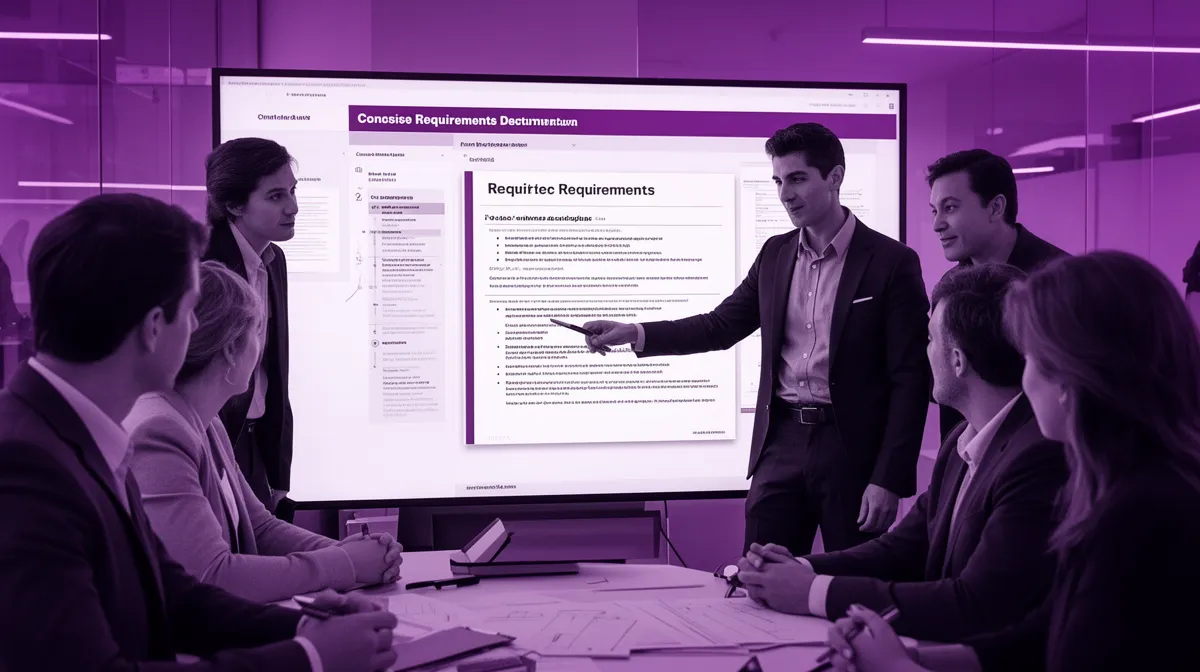
Deliverable 1: One-page “AI Use Case Brief” per priority bet
Each priority use case should have a one-page brief that is readable by executives and usable by implementers. It’s the artifact that prevents scope drift because it defines the problem and the boundaries.
What’s inside (as headings, not a fancy template):
- Problem statement + who experiences it
- Users and workflow (current vs proposed)
- Proposed AI intervention (what changes in the process)
- Inputs/outputs and systems touched
- Security and data boundaries
- Success metrics: baseline and target
- Risks, assumptions, and dependencies
This one page becomes the shared contract across business, IT, and the vendor.
Deliverable 2: Architecture and integration notes your engineers won’t reject
Engineers reject most consulting output for one reason: it’s not specific enough to implement. A serious partner provides architecture notes with trade-offs and integration details, not just boxes and arrows.
At minimum, it should cover model selection rationale (API vs open model vs fine-tune), where RAG is appropriate, and where you should use tools/automation instead of generation. It should include operational requirements like monitoring, logging, rate limits, and cost controls.
An “engineer-ready” excerpt might look like this:
“Integrate with Zendesk via OAuth 2.0; write triage labels to custom fields; store conversation summaries in ticket comments; log all tool calls with request/response metadata; route PII fields through tokenization service; maintain an audit log for agent decisions; enforce per-user rate limits; daily evaluation run against golden set.”
If the consultant can’t produce something like this, you don’t have implementation consulting—you have advice.
For practical governance and deployment patterns, vendor playbooks can be useful reference points, like Microsoft’s Responsible AI guidance or the AWS Well-Architected Machine Learning Lens. Your environment will differ, but the operational questions rhyme.
Deliverable 3: Implementation roadmap tied to owners and gates
The ai implementation roadmap is where strategy becomes execution. It should describe phases in plain language—discovery → PoC → pilot → scale—and it should attach owners, dependencies, and decision gates to each phase.
In prose, a good roadmap sounds like this: “In weeks 1–2, we run requirements workshops and data readiness assessment; by the end we ship one-page briefs and an integration plan. Weeks 3–6, we run a PoC in a controlled environment with a golden set and human review. If we hit a 25% self-serve resolution rate without a CSAT drop, we move to a pilot with 10% traffic. If escalation volume exceeds capacity, we pause and improve routing and KB coverage. Only after the pilot shows KPI movement do we scale across channels.”
Notice what’s missing: wishful timelines without gates. And what’s included: who does what, and how decisions are made.
Buyer’s Scorecard: Questions That Test Translation (Not Buzzwords)
Most vendor selection processes accidentally reward the wrong thing: confidence and buzzwords. Your job is to test translation—can they turn your request into a requirement, and can they explain trade-offs in a way your team can execute?
This is how to choose an ai technology consulting partner without needing a PhD in machine learning.
Ask for a live translation: from request to requirement
Give them a prompt: “We want an AI agent for customer support.” Ask them to run a 10-minute clarification, live. The best consultants immediately ask about constraints, edge cases, KPIs, and data—not model trivia.
Here are 8 interview prompts you can use in vendor calls:
- What’s the business KPI and baseline for this use case?
- Which workflows will change, and who owns them today?
- What happens when the AI is unsure?
- Which systems must we read from and write to?
- What categories of answers require citations or approvals?
- What’s the acceptable latency per channel (voice vs chat)?
- What’s the rollout plan to avoid a CSAT hit?
- How will we monitor quality and cost week over week?
Ask for their ‘stop’ criteria
A consultant who never says “no” isn’t translating; they’re selling. Ask: what would make you recommend not building?
Good answers include limited data readiness, prohibitive integration cost, or a workflow that can’t absorb change. More importantly, they’ll propose a “not yet” alternative: clean up the knowledge base, instrument the workflow, or automate a narrower step first.
Example of a responsible recommendation: “Don’t build a fully autonomous agent yet. Your policy docs conflict across regions and escalations aren’t standardized. First, consolidate KB ownership and implement assisted drafting with mandatory citations; once we have stable content and a handoff process, we can safely raise autonomy.”

Ask to see an anonymized deliverable package
Ask for anonymized outputs: the one-pagers, decision log, PoC plan, KPI model, and risk register. Then test for specificity.
Use this implementability checklist:
- Clear owners for business, IT, security, and vendor workstreams
- Explicit assumptions and how they’ll be validated
- System integrations listed (not implied)
- KPIs with baseline + target + measurement plan
- Evaluation method (golden set, review loop, error taxonomy)
- Decision gates that allow stopping without drama
If you see only generic narratives, you’re buying slideware.
Common Failure Modes—and the Red Flags That Predict Them
AI projects don’t usually fail because the model can’t answer questions. They fail because the system can’t be operated safely and economically inside a real organization.
Here are the common failure modes—and the red flags that predict them.
Red flag: Tool-stack flexing without workflow ownership
If a consultant spends more time naming models than mapping who updates the knowledge base, they’re optimizing for theater. A working system has owners: someone curates content, someone monitors quality, someone decides how escalation works.
Listen for the difference between: “We’ll use the latest model” and “Here’s how we’ll prevent wrong answers from reaching customers, and here’s what happens when confidence is low.” The second one is operational truth.
Red flag: “ROI” that isn’t connected to operations
Hand-wavy savings are a tell. If the ROI model doesn’t reference baseline volumes, time per task, adoption assumptions, and cost-to-serve, it’s a spreadsheet fantasy.
A quick sanity check is: volume × time saved × adoption × labor rate, then subtract implementation and run costs. If the consultant can’t articulate the measurement plan (instrumentation, dashboards, and review cadence), the ROI claim is marketing.
Red flag: No governance until “later”
Governance isn’t compliance theater; it’s how you ship safely with speed. Missing audit logs, access controls, data boundaries, and evaluation practices means you’re accumulating risk that will surface at the worst moment: after users start relying on the system.
Lightweight governance looks like roles + review cadence: who approves KB changes, who reviews sampled conversations weekly, who owns incident response, and what gets logged. Frameworks like the NIST AI Risk Management Framework and ISO/IEC 23894:2023 are useful anchors—not because you need bureaucracy, but because they force you to name risks and controls.

Why Buzzi.ai Is Translation-First (and What That Changes for Outcomes)
At Buzzi.ai, we treat ai technology consulting as a practical translation function: turn messy goals into buildable scope, then build the agent when you’re ready. That orientation changes what we produce, how quickly you learn, and how often you avoid expensive detours.
Translation outputs designed to be implemented by real teams
Our discovery work is designed to survive handoff. That means engineer-usable scopes, integration notes, and evaluation plans—not just narratives. We build AI agents and automation systems, so we’re constantly calibrating what’s feasible in weeks versus quarters.
Here’s a typical before/after translation:
Before: “We need AI for support.”
After: “We will deploy a WhatsApp-first support agent for the top 20 intents; integrate with your ticketing system to create/append tickets; enforce citations; add escalation triggers; track deflection, CSAT, and cost per resolved case; pilot at 10% traffic with weekly evaluation.”
When you want to go from consulting to delivery, we can do that without re-learning the context. That’s the point of translation-first.
If you’re looking for implementation after consulting, see our AI agent development for implementation after consulting.
Execution readiness in emerging-market realities
A lot of “enterprise AI strategy” assumes perfect data, clean APIs, and a desktop-centric user. Emerging markets often look different: WhatsApp is a primary channel, languages are mixed, and cost/latency constraints are real.
Translation in these environments means channel-first design, multilingual handling, and human-in-the-loop escalation that preserves trust. A practical scenario: a WhatsApp voice bot triages inquiries, answers policy questions with citations, and routes urgent cases to the right queue—with a clear handoff when confidence is low or risk is high.
This isn’t futuristic. It’s operational. And it’s the difference between “we tried AI” and “we changed cost-to-serve.”
Conclusion: Translation Is the Work, Not the Packaging
AI technology consulting is valuable when it translates ambiguity into buildable requirements and clear decisions. The best partners are judged by discovery quality, alignment artifacts, and implementable deliverables—not by tool stacks or slide count.
A good AI implementation roadmap ties use cases to KPIs, owners, gates, and integration realities. Translation-first approaches reduce wasted PoCs and speed time-to-value by preventing rework—because you’re de-risking the right thing, early.
Use the buyer’s scorecard: ask for live translation, stop criteria, and anonymized deliverables. You’ll quickly separate doers from slide-makers.
If you want an AI technology consulting partner that turns messy goals into an implementation-ready plan (and can build the agent when you’re ready), book a discovery call through our AI Discovery service.
FAQ
What is AI technology consulting, and how is it different from AI strategy consulting?
AI technology consulting focuses on turning a business goal into an implementable plan: feasibility, architecture choices, integration details, and operating model. It’s where “what should we do?” becomes “what will we build, with which systems, and how will we run it safely?”
AI strategy consulting can be broader and more conceptual—portfolio themes, org design, and long-term capability building. Both matter, but technology consulting is what prevents beautiful strategy from collapsing when it hits your data and workflows.
Why is business-to-technical translation the most important AI consulting skill?
Because most failures aren’t model failures; they’re requirements failures. Teams build the wrong thing flawlessly when nobody translates “reduce calls” into a measurable outcome, constraints, and acceptance criteria.
Translation also protects time-to-value: it reduces rework by forcing clarity on data boundaries, escalation rules, and ownership before you scale. That’s why stakeholder alignment is an engineering accelerant, not a meeting tax.
What should an AI technology consulting deliverable include to be implementation-ready?
At minimum: a one-page use case brief (problem, users, KPIs), an integration and architecture note (systems, auth, logging, RAG/tools boundaries), and an evaluation plan (golden set, review loop, error taxonomy).
Implementation-ready also means owners and gates: who updates the knowledge base, who reviews quality, and what thresholds trigger rollout, iteration, or stopping. If you can’t assign owners, you can’t operationalize the system.
How do you evaluate an AI consulting firm if you’re a non-technical executive?
Ask for a live translation exercise: give them a vague ask and see if they produce testable requirements, constraints, and KPIs in 10 minutes. Watch whether they ask about workflow exceptions and data location before naming tools.
Then request anonymized deliverables and check for specificity: systems touched, measurement plan, escalation rules, and decision gates. Technical depth matters, but your best signal is whether their outputs are legible to business and usable by engineers.
What questions should we ask to test an AI consultant’s translation ability?
Ask: what’s the baseline KPI, what changes in the workflow, what happens on low confidence, and what systems must we integrate with. Also ask for their “stop” criteria—what would make them recommend not building right now.
If you want a structured way to run those conversations, start with an AI discovery workshop that forces requirements clarity and produces buildable artifacts your teams can execute.
How should AI consultants prioritize use cases by impact, feasibility, and data readiness?
They should score impact (revenue/cost/risk with a KPI baseline), feasibility (integration complexity, latency, security constraints), and data readiness (coverage, freshness, labeling needs). The goal is not a perfect score; it’s to make trade-offs visible so leadership can decide fast.
In practice, the best “first bets” are narrow decision wedges with clear instrumentation—like ticket triage, document extraction for invoices, or a constrained support agent with strong handoff rules.
When should we choose RAG, automation/tools, or fine-tuning for a business use case?
Choose RAG when correctness depends on your internal knowledge and policies, and you can maintain a reliable source of truth. Choose tools/automation when the task requires deterministic actions (create a ticket, fetch an order status, update a CRM field) and you want predictable outcomes.
Consider fine-tuning when you have a stable, repeated task with consistent patterns and enough high-quality labeled data—and when governance approvals and cost make sense. A good AI technology consulting partner will explain these trade-offs in business terms, not just technical jargon.